Choosing Between Owned Fleet and Third-Party Logistics for Delivery

Every growing D2C brand eventually faces the delivery model question: keep relying on third-party logistics providers, or start building an owned fleet for at least part of the delivery network. Neither answer is universally correct, and the right choice depends heavily on order density, delivery radius, and how much operational control actually matters for the specific customer experience a brand is trying to build.
What Each Model Actually Offers
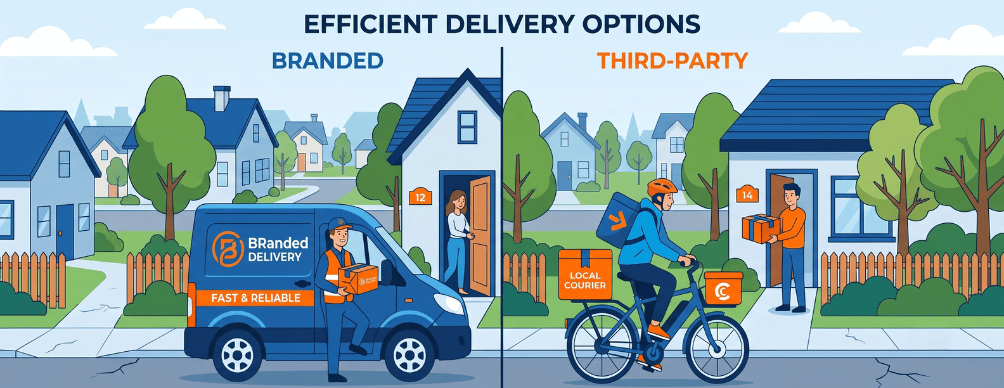
Third-party logistics, commonly shortened to 3PL, means outsourcing delivery to an external courier network, which requires no capital investment in vehicles or drivers and scales flexibly with order volume without the brand managing logistics operations directly. An owned fleet means the brand hires drivers and manages vehicles directly, trading the flexibility and low upfront cost of 3PL for greater control over delivery timing, customer experience, and unit economics at scale.
Cost Comparison at Different Volume Levels
| Order Volume | Typical Better Fit | Reasoning |
| Low to moderate volume | Third-party logistics | Avoids fixed cost of underutilized fleet |
| High, geographically dense volume | Owned fleet often more cost-effective | Fixed costs spread across more deliveries |
| High but geographically dispersed | 3PL or hybrid model | Owned fleet inefficient across wide areas |
Why Density Matters More Than Raw Volume
The volume number alone does not determine which model is more cost-effective, delivery density within a service area matters just as much. A brand with high order volume concentrated in a single metro area can run an owned fleet efficiently, since drivers complete many deliveries per route with minimal dead mileage between stops. The same order volume spread thinly across a wide geographic area struggles to achieve that same routing efficiency, making 3PL’s broader network advantage more valuable despite the per-delivery cost.
Control Over Customer Experience
An owned fleet gives direct control over delivery timing precision, driver behavior, and the ability to offer premium delivery experiences, specific time slots, white-glove handling for fragile items, that a shared third-party network often cannot guarantee as reliably. For brands where delivery experience is a genuine differentiator, premium or fragile product categories, subscription boxes with brand-critical unboxing moments, this control can justify the higher operational complexity of managing a fleet directly.
A Hybrid Approach Works for Many Growing Brands
Rather than choosing exclusively between the two models, many growing brands run a hybrid approach: an owned fleet covering their highest-density metro areas where the economics and control benefits are clearest, paired with 3PL coverage for lower-density regions where an owned fleet would be inefficient. This lets a brand capture the control and cost benefits of ownership where it makes sense, without taking on the fixed cost burden of an owned fleet across areas that cannot support it efficiently.
A Practical Decision Framework
- Map current order density by geography rather than looking at total volume alone
- Identify whether delivery experience is a genuine brand differentiator for your specific product category
- Model the fixed cost of an owned fleet against your highest-density service areas specifically, not company-wide averages
- Consider a hybrid model rather than assuming the choice must be all-or-nothing across every region
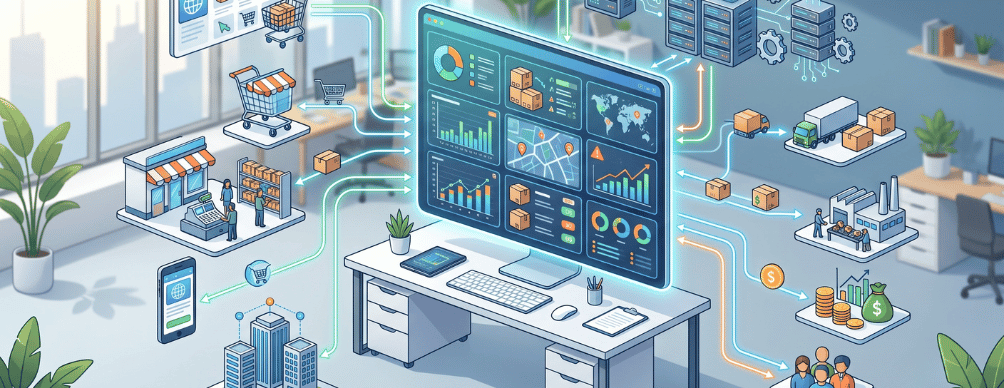
Sellers running order management through Zyfoo’s commerce platform can track delivery performance by region directly, which makes the density analysis behind this decision considerably easier than piecing it together from separate logistics provider reports.