
Consolidating Marketplace and Website Reporting Into One View

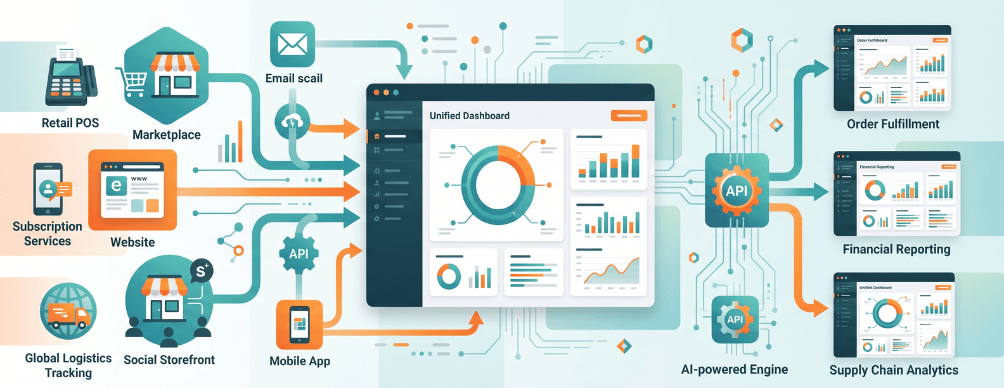
Selling across a marketplace and your own website is now the default for most growing D2C brands, but the reporting side of that setup rarely gets the same attention as the sales channels themselves. Most founders end up checking marketplace dashboards separately from their website analytics, manually reconciling numbers in a spreadsheet, or worse, making decisions based on whichever dashboard happens to be open at the time. Consolidated reporting fixes a problem that compounds quietly as channel count grows.
Why Fragmented Reporting Slows Down Decisions
The core issue with checking marketplace and website data separately is not that the individual numbers are wrong, it is that comparing them accurately requires manual work every single time a decision needs making. Which channel is actually driving margin, not just revenue. Which products sell well on the marketplace but underperform on the website, or the reverse. These are exactly the questions consolidated reporting answers quickly, and exactly the questions that take real effort to answer manually across separate dashboards.
What a Consolidated View Should Actually Show
A genuinely useful unified dashboard goes beyond simply stacking total revenue figures side by side. It should let you compare margin, not just top line sales, across channels, since marketplace fees and website payment processing costs differ meaningfully and can flip which channel looks more profitable once fees are properly accounted for. Product level performance broken down by channel is equally important, since a product that is a bestseller on a marketplace might barely register on your own website, or vice versa.
| Reporting Element | Why It Matters | Common Blind Spot |
| Revenue by Channel | Baseline comparison | Ignores differing fee structures |
| Margin by Channel | True profitability picture | Rarely tracked separately by most sellers |
| Product Performance by Channel | Guides inventory and marketing decisions | Assumed to be uniform across channels |
The Manual Reconciliation Trap
Many growing sellers handle this with a weekly or monthly spreadsheet pull from each channel, manually combining the numbers. This works at small scale but becomes genuinely time consuming and error prone as order volume and channel count grow, and it means decisions are made on data that is often days or weeks stale by the time the manual reconciliation is finished. The time cost of this manual process is usually underestimated until someone actually tracks the hours spent on it each month.
- Track margin by channel, not just revenue, fee structures differ enough to change the picture
- Compare product level performance across channels, not just store-wide totals
- Estimate the actual hours spent on manual reporting reconciliation each month before dismissing automation
- Set a consistent reporting cadence once consolidated, weekly review catches issues faster than monthly
See Our Unified Reporting Dashboard
When Consolidation Becomes Worth the Investment
For a seller on a single marketplace with no separate website, consolidated reporting is less urgent since there is only one data source to check. The moment a second sales channel is added, even a simple one, the case for a unified view strengthens considerably, since the comparison questions that matter most only become answerable once both data sources are actually sitting in the same place.
If you are managing sales across a marketplace and your own storefront, our commerce cloud reporting features pull both into a single dashboard, and our team can walk through what that looks like against your actual channel mix during a quick demo.