From Walk-in to Repeat Buyer: Building a CRM Workflow for Offline-to-Online Retail

Every retail business owner in India knows what it feels like to watch a good customer walk out the door and wonder whether they will come back. Some of them do. Most of them drift, not to a competitor necessarily, but simply away. They get busy. They discover a faster option. They forget the store exists until they happen to walk past again. In a physical-only retail model, the business has very little power over that drift. A walk-in customer who leaves without a digital connection to the store is, for practical purposes, lost to memory and chance.
The shift from purely offline retail to an offline-and-online model, what the commerce industry refers to as O2O or offline-to-online commerce, changes that dynamic fundamentally. It creates the infrastructure through which a walk-in customer becomes a trackable, reachable, and ultimately retainable relationship rather than an anonymous transaction. The technology that makes this possible is a unified CRM workflow, one that begins at the physical counter and extends seamlessly into digital engagement across WhatsApp, the brand’s online store, and personalised communication campaigns.
Research consistently validates the commercial importance of this shift. Businesses using CRM systems see approximately 27 percent higher customer retention by centralising customer data and enabling more personal, proactive interactions. Companies with strong omnichannel engagement, the category that O2O retail falls into, retain 89 percent of customers year over year compared to only 33 percent for businesses with weak omnichannel implementations. These are not incremental differences. They represent a fundamental divide between businesses that own their customer relationships and businesses that depend on foot traffic and chance repeat visits.
This guide builds the complete CRM workflow for Indian retail businesses making the offline-to-online transition in 2026. It covers how to capture walk-in customers into the CRM without friction, how to structure the workflow stages from first visit to loyal online buyer, which automation triggers drive the highest repeat purchase rates, and how a unified platform like Zyfoo CRM connects the physical and digital sides of the customer relationship into a single, actionable view.
Why Most Indian Retail Businesses Lose the Customers They Already Have
The average Indian retail business, whether it is a clothing boutique, a specialty food store, a jewellery shop, or a home goods outlet, invests the majority of its time and resources in attracting new customers. Window displays, social media posts, local advertising, word-of-mouth promotions, and festival season sales events are all designed to bring people in for the first time. The experience of converting a new visitor into a buyer is one the store has optimised over years.
What most of these businesses have not optimised is what happens after the first purchase. The customer leaves with their product, a paper receipt, and no digital trace of the relationship. The store has no way to contact them, no record of what they bought, and no mechanism to make a personalised offer when a relevant product arrives. The second purchase, if it happens at all, is driven entirely by the customer’s own initiative, their memory of a positive experience, and their proximity to the store on a day they happen to need something.
This is the gap that a CRM workflow closes. According to research on O2O commerce strategy, integrating CRM to build a single view of the customer is one of the three foundational steps of any successful offline-to-online transition, alongside connecting the POS with the ecommerce platform and unifying inventory across channels. The CRM is not merely a contact database. It is the engine that converts anonymous transactions into named, profiled, and communicable customer relationships.
For Indian retail businesses in 2026, the urgency of building this capability is heightened by competitive dynamics. Quick commerce apps are training customers to expect delivery within minutes. Large organised retailers are running sophisticated loyalty programmes backed by data science teams. D2C brands with online-only models are acquiring customers digitally and retaining them through automated email and WhatsApp sequences. A physical retail business that does not build its own digital customer relationship infrastructure is competing with one hand tied behind its back, relying on location and reputation alone while competitors use data.
The encouraging reality is that the CRM workflow for offline-to-online retail does not require a large technology investment or a dedicated data team. It requires a clear process, a platform that connects the physical and digital touchpoints, and the discipline to execute consistently from the first customer interaction onward. The businesses that build this workflow in 2026 are the ones that will still be growing profitably when foot traffic alone becomes an increasingly unreliable growth driver.
The Foundation: Capturing Walk-in Customers into Your CRM Without Friction
The first and most critical step in any offline-to-online CRM workflow is the moment of capture: getting the walk-in customer’s phone number or email address linked to their purchase record in a way that feels natural, adds value for the customer, and does not slow down the billing process. This is where most retail businesses either do it awkwardly, demand contact details without offering a reason, or skip it entirely because it feels uncomfortable.
The capture moment needs to be designed around a genuine value exchange. The customer gives their phone number and in return they receive something specific: a digital receipt delivered instantly via WhatsApp, early access to sale events, a loyalty point credited to their account, or a warranty registration confirmation. When the exchange is explicit and the benefit is immediate, opt-in rates at the counter are consistently high. When the request is vague or feels like data collection for its own sake, resistance is natural and the capture rate drops significantly.
The Four Capture Methods That Work in Indian Retail Contexts
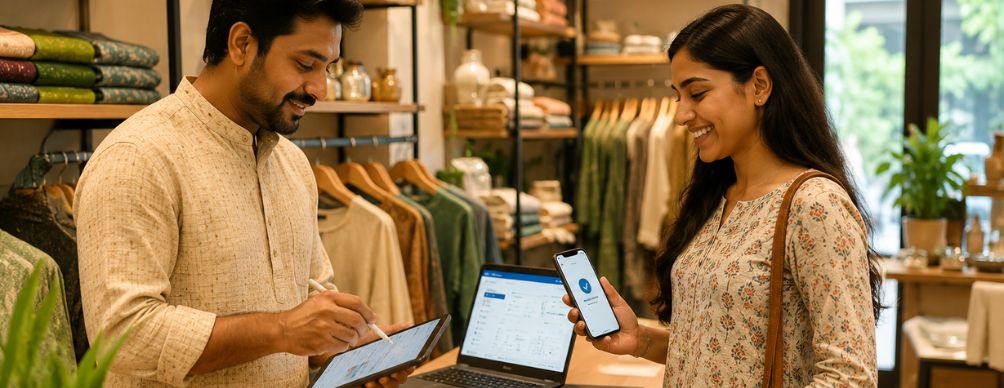
The WhatsApp digital receipt is the most universally effective capture method in India because every customer with a smartphone already uses WhatsApp and a digital receipt via WhatsApp is genuinely convenient. The conversation starts with a practical transaction and the customer’s number is linked to their purchase profile automatically. Future communications from the store arrive in the same WhatsApp thread, which feels familiar and non-intrusive rather than promotional.
Loyalty programme enrolment at the billing counter is the second most effective method, particularly for stores with higher average order values or frequent repeat purchase categories. The customer is told explicitly that their points will be credited against the purchase they just made, creating an immediate and tangible reason to share their number. The loyalty account then becomes the CRM identifier that links all future purchases, both in-store and online, to the same customer profile.
Festival or campaign registration is effective during peak trading seasons when the customer has a specific motivation to stay connected. A Diwali offer registration, a new collection early-access signup, or a back-in-stock alert for a specific product all give the customer a specific and time-relevant reason to provide their contact details, and the capture rate during these moments is substantially higher than during routine billing.
QR-code-based self-registration at the store is increasingly effective for customers who prefer to initiate the process themselves rather than giving their number to a staff member. A QR code at the counter or on the receipt links to a brief registration form. The customer fills it in while waiting, the data goes directly into the CRM, and the store does not need to manually enter any contact information. This method works particularly well for tech-comfortable younger shoppers who are comfortable with the QR scanning behaviour from restaurant and payment contexts.
| Capture Method | Best For | Why It Works in India |
|---|---|---|
| WhatsApp digital receipt | All store types and age groups | WhatsApp is universal and digital receipts are genuinely useful |
| Loyalty programme enrolment | Higher-value repeat purchase stores | Immediate point credit creates tangible same-visit value |
| Festival or campaign registration | Seasonal retail peaks | Specific time-relevant benefit drives higher opt-in willingness |
| QR-code self-registration | Younger, tech-comfortable shoppers | Self-initiated feels less like data collection, more like choice |
Building the CRM Profile: What Data to Capture and Why Each Field Matters
A CRM profile for a retail customer does not need to be complicated to be useful. The complexity that makes enterprise CRM systems intimidating is largely unnecessary for the retail use case. What a retail business needs is a clean, structured record of each customer that enables personalised communication, purchase history analysis, and behavioural segmentation. That requires a limited but carefully chosen set of data fields captured consistently across every interaction.
The Core Profile Fields Every Retail CRM Record Should Contain
The customer’s name and primary phone number are the non-negotiable foundation. The phone number is the unique identifier that links the physical customer to their digital profile, their online account, their WhatsApp communication, and their purchase history. Without it, the profile cannot be connected across channels.
The first purchase date and the first purchase category tell the CRM workflow when the relationship began and what the customer’s initial interest was. This data is used to trigger the onboarding sequence, which begins within 24 to 48 hours of the first purchase, and to ensure that the first automated communications are relevant to what the customer actually bought rather than a generic welcome message.
The customer’s product category preferences, derived from their purchase history over time rather than asked directly, are what enable personalised communications. A customer who has bought from the women’s ethnic wear category on three visits should receive communications about new arrivals in that category, not blanket store promotions that include categories irrelevant to them. This preference data builds itself automatically as the customer makes more purchases, which is one of the most powerful aspects of a CRM that is connected to the POS and the online store simultaneously.
The average order value, calculated automatically from the customer’s transaction history, determines which customer segment they belong to and what level of investment the business should make in retaining them. A customer whose average purchase is Rs 3,500 to Rs 5,000 deserves a meaningfully different retention strategy than a customer whose average purchase is Rs 400 to Rs 600, and treating them identically is a common and costly mistake in retail CRM.
The channel preference, whether the customer primarily buys in-store, through WhatsApp, or through the online store, informs which communication channel and which type of offer is most likely to convert. A customer who has never placed an online order but visits the store regularly needs a different journey than a customer who discovered the store online and has only bought through the website. Both are valuable; neither should be approached with the same workflow.
The Five-Stage CRM Workflow: From First Visit to Loyal Online Buyer
The CRM workflow for offline-to-online retail is not a single communication sequence. It is a structured journey that matches the customer’s relationship stage at each point and delivers the right message at the right moment to move them toward deeper engagement and more frequent purchase. Each stage has a specific objective, a specific set of triggers, and a specific set of actions that the workflow executes automatically once it is configured correctly.
Stage One: Capture and Welcome (Days 0 to 2)
The capture stage begins at the billing counter during the customer’s first visit. The phone number is collected, the purchase is recorded in the CRM, and the customer is automatically tagged as a new first-time buyer. Within two to four hours of the purchase, a WhatsApp message is sent that serves as both a receipt confirmation and a brand welcome. The message should be brief, warm, and specific: it references the actual product purchased, confirms the transaction details, and tells the customer what they can expect to receive in future communications from the store.
This welcome message is the first impression the brand makes on the customer in the digital channel, and it sets the expectation for the relationship. A welcome message that reads like a standard marketing opt-in confirmation does very little. A welcome message that feels personal, references their specific purchase, and gives them something immediately useful, a care instruction for what they bought, a how-to tip, a complementary product recommendation, creates a positive first impression that makes the customer more receptive to future communications.
Stage Two: Onboarding and Brand Building (Days 3 to 14)
The onboarding stage is where most retail businesses fail in their CRM journey. After the welcome message, they go quiet for weeks, and the customer who might have been nudged toward their online store or toward a second purchase simply drifts away. A structured onboarding sequence prevents this by maintaining low-frequency, high-value contact during the two weeks after the first purchase.
The onboarding sequence for a retail CRM typically consists of two to three additional touchpoints over 14 days. The first is a product-related value communication sent three to five days after purchase: a styling tip for fashion, a recipe suggestion for specialty food, a care guide for home goods, or a usage recommendation for beauty products. This message adds genuine value and does not ask for anything in return. Its purpose is to demonstrate that the brand relationship extends beyond the transaction.
The second onboarding touchpoint, sent around day 10 to 14, introduces the online store for customers who have not visited it yet. The message should give the customer a specific reason to visit, a new arrival in the category they bought from, an online-exclusive offer, or a convenience benefit such as home delivery for their next order. This is the moment that begins the offline-to-online conversion of the customer relationship, moving them from physical-only buyer to someone who considers the brand’s digital channel a natural way to shop.
Stage Three: Re-engagement Before Drift (Days 30 to 45)
A customer who has not made a second purchase within 30 to 45 days of their first visit is approaching the early churn threshold. They have not explicitly rejected the brand but their engagement is fading. This is the window where a targeted re-engagement communication is most cost-effective, because the customer still remembers the brand and the effort required to bring them back is lower than it will be at 90 or 120 days.
The re-engagement message at this stage should reference the specific product the customer purchased on their first visit and offer something relevant to their next logical purchase. If the customer bought a kurta set, the message might highlight a new dupatta collection or coordinate pieces that pair with that style. If they bought cooking oil, a notification about a new variant or a multi-pack pricing offer is relevant. The specificity of the reference is what distinguishes a re-engagement message that converts from a generic promotional blast that gets ignored.
Stage Four: Loyalty and Channel Migration (Months 2 to 4)
A customer who makes a second purchase within 60 days of their first has demonstrated a meaningful degree of loyalty and is ready for the next stage of the CRM workflow: deepening the relationship and migrating them toward the online channel if they have not already made that transition. This stage is where the investment in the CRM workflow begins to pay the largest dividends in terms of customer lifetime value.
Loyalty recognition at this stage does not need to be complex or expensive. A personalised message acknowledging their second purchase, a higher-tier loyalty benefit such as free delivery on their next online order, or early access to an upcoming sale event communicates that the brand has noticed and values their continued patronage. Customers who feel recognised as returning buyers show significantly higher third-purchase rates than those who are treated identically to first-time buyers regardless of their history.
The channel migration goal at this stage is to give the customer a compelling reason to try the online store if they have not already. The most effective trigger for this is a convenience benefit tied to something they already want: a product they enquired about in-store that is now available online and can be delivered to their home, or an upcoming festival collection that launched online before it arrived in the physical store. The goal is to make the online channel feel like an extension of the store experience they already trust, not a separate or inferior alternative.
Stage Five: Advocacy and High-Value Retention (Month 4 Onward)
A customer who has made three or more purchases across a four-month period, through any combination of physical and online channels, is a high-value customer and a potential brand advocate. They have chosen the brand repeatedly when alternatives were available. They know the product range, trust the quality, and have established a preference that makes them significantly more likely to refer others than a single-purchase customer.
The CRM workflow at this stage shifts from conversion-focused to relationship-focused. Communications become less promotional and more exclusive: early access to new collections, invitations to offline events, personalised styling or product consultations, or a recognition of their anniversary as a customer. These gestures are inexpensive relative to their impact on retention and advocacy, and they build the kind of customer relationship that a transactional approach cannot create.
| CRM Stage | Timeline | Primary Objective | Key Action |
|---|---|---|---|
| Capture and Welcome | Day 0 to 2 | Record customer and set relationship tone | WhatsApp receipt and welcome message |
| Onboarding | Day 3 to 14 | Add value and introduce online channel | Product tip and online store introduction |
| Re-engagement | Day 30 to 45 | Prevent early churn before drift sets in | Personalised repurchase prompt |
| Loyalty and Migration | Month 2 to 4 | Deepen relationship and build omnichannel habit | Recognition and online channel incentive |
| Advocacy and Retention | Month 4 onward | Convert loyal buyer into brand advocate | Exclusive access and personalised relationship |
Build Your CRM Workflow with Zyfoo
The WhatsApp Layer: Why This Channel Sits at the Centre of Indian Retail CRM
Any discussion of CRM workflow for Indian retail that does not centre WhatsApp as the primary communication channel is missing the most important contextual reality of Indian consumer communication. India has over 500 million active WhatsApp users. WhatsApp is the first application most Indian smartphone users open every morning and the last they check before sleeping. For retail businesses, it is the communication channel with the highest open rates, the most natural interaction format, and the lowest barrier to personalised conversation.
Email-based CRM workflows, which dominate retail customer communication frameworks developed in Western markets, underperform in the Indian context because email is not the primary communication channel for most Indian consumers in the demographic segments that represent the core retail customer base. A WhatsApp message from a store the customer recognises is read within minutes. An email from the same store may sit unopened for days or be automatically sorted into a promotions folder it is never checked.
The WhatsApp-first CRM workflow for Indian retail uses WhatsApp for every stage of the customer journey described above: the initial receipt and welcome, the onboarding value messages, the re-engagement communications, the loyalty recognition, and the advocacy-stage relationship management. It does not replace other channels, email works well for longer-form communications and for customers who prefer it, and SMS remains useful for transactional notifications and for customers without WhatsApp. But WhatsApp is the backbone of the workflow because it is where the highest percentage of Indian retail customers actually engage.
The practical implementation of WhatsApp CRM for retail requires the WhatsApp Business API rather than the standard WhatsApp Business app. The standard app allows a single device and a single user to manage conversations manually, which does not scale beyond a small handful of customers. The API allows the CRM system to send automated messages at scale, manage conversations across multiple staff members, and maintain a consistent communication history for each customer regardless of which team member handles their enquiry. Integrating the WhatsApp Business API with the store’s CRM and order management system is the technical step that makes the automated workflow described above possible.
Segmenting Your Customer Base for More Effective CRM Communication
A CRM workflow that treats all customers identically will underperform consistently. The first purchase customer, the twice-a-year festival buyer, the monthly regular, and the once-in-two-weeks high-value purchaser all deserve different communication strategies because they have different relationship depths, different purchase motivations, and different sensitivities to frequency and offer type.
Effective segmentation for an Indian retail CRM does not require sophisticated data science. It requires a consistent approach to categorising customers based on the data that is already being collected through the POS and CRM, and updating those categories automatically as the customer’s behaviour evolves. The segmentation model that produces the most practical improvement in retention outcomes for retail businesses is built on three variables: recency, frequency, and monetary value, commonly referred to as RFM analysis.
| Customer Segment | RFM Profile | Recommended CRM Approach |
|---|---|---|
| Champions | Recent, frequent, high value | Exclusive access, advocacy programmes, personal attention |
| Loyal Regulars | Frequent, moderate to high value | Reward consistency, early sale access, channel expansion |
| Promising Actives | Recent, low frequency, any value | Onboarding investment, second purchase nudge, category depth |
| At-Risk Regulars | Not recent, was frequent | Targeted win-back, personalised offer, check-in message |
| Lost Customers | Not recent, low frequency | Single re-engagement attempt only, then suppress from list |
The RFM segmentation works because it reflects the commercial reality of the customer base rather than making assumptions about what customers want based on demographics alone. A 55-year-old woman who buys premium silk sarees every three weeks is a Champion regardless of her age. A 25-year-old who bought once during a sale six months ago and has not returned is an At-Risk or Lost customer regardless of the potential the brand might imagine for the demographic she represents. The data drives the segmentation, not the assumption.
For retail businesses building this segmentation for the first time, the most important step is consistency of CRM data capture. A segmentation model is only as useful as the data quality underlying it. Stores that consistently capture customer phone numbers, link purchases to profiles, and record transaction details across both physical and online channels will have the clean, complete data that makes RFM segmentation actionable. Stores that capture customer data inconsistently will find their segments unreliable and their targeted communications misdirected.
Automating the CRM Workflow: The Triggers That Drive Repeat Purchases
The CRM workflow described above is most powerful when it operates automatically, triggered by customer actions and time-based rules rather than requiring manual intervention from the store owner or staff for each communication. Manual CRM management does not scale. Once a store has more than a few hundred active customers, the complexity of remembering who needs a re-engagement message, who is ready for a loyalty recognition, and who has recently made their third purchase exceeds what any individual or small team can manage without automation.
The automation triggers that drive the highest repeat purchase rates in retail CRM workflows are built around three categories of customer events: time-based triggers, behaviour-based triggers, and inventory-based triggers. Each produces a different type of communication and targets a different customer intent.
Time-Based Triggers
These are the simplest automation triggers to configure and the most consistent in their outcomes. A time-based trigger fires a specific message after a defined number of days have passed since a customer event: 2 days after first purchase sends the welcome sequence message two, 30 days after last purchase triggers the re-engagement message, 90 days after enrolment in the loyalty programme without a qualifying purchase sends a loyalty reactivation prompt. Time-based triggers do not require complex behavioural analysis. They simply track elapsed time and fire the relevant workflow step. They are the baseline of any retail CRM automation and should be configured first before building more sophisticated triggers on top of them.
Behaviour-Based Triggers
These triggers fire when a customer takes a specific action: they visit the online store but do not purchase, they add a product to a wishlist, they open a WhatsApp message but do not respond, or they make their third purchase and qualify for the next loyalty tier. Behaviour-based triggers are more personalised than time-based triggers because they respond to what the customer actually did rather than simply to how much time has passed. A customer who browsed the new summer collection on the website but did not purchase receives a different message than a customer who has simply not bought in 30 days, because their browsing behaviour reveals a specific interest that the time-based message does not detect. For retail businesses with an integrated platform that connects the physical POS, the online store, and the CRM, behaviour-based triggers draw from a rich data source that captures the full customer journey across channels.
Inventory-Based Triggers
These triggers connect the CRM to the inventory system to fire communications when a product relevant to a specific customer becomes available or changes in price. A customer who asked about a specific product that was out of stock in the physical store receives a WhatsApp notification when that product is restocked, either in-store or online. A customer who regularly buys a specific brand of product in a category receives a notification when that brand is included in a promotional price event. Inventory-based triggers convert latent demand that already exists, because the customer has already expressed interest, rather than trying to create new demand through generic promotional messaging. Their conversion rates are consistently among the highest of any automated CRM trigger in retail contexts.
Measuring CRM Workflow Effectiveness: The Metrics That Show Real Progress
The metrics that matter most for evaluating a retail CRM workflow are not the same as the metrics that matter for evaluating a marketing campaign. Open rates and click-through rates tell you about message performance. The CRM workflow metrics that reflect business health are deeper and more directly connected to revenue and customer lifetime value.
| Metric | What It Measures | Healthy Direction |
|---|---|---|
| Second purchase rate | Percentage of first-time buyers who make a second purchase | Above 30% within 90 days is strong for retail |
| Average time to second purchase | Days between first and second purchase | Decreasing month over month indicates workflow effectiveness |
| Online channel adoption rate | Walk-in customers who make at least one online purchase | Rising percentage indicates successful O2O migration |
| Customer lifetime value by segment | Revenue per customer across each RFM segment | Growing gap between Champions and others validates segmentation |
| CRM-attributed revenue | Revenue from customers in the CRM vs anonymous buyers | Growing share indicates CRM investment is delivering returns |
The second purchase rate is the single most important leading indicator of CRM workflow effectiveness. If the workflow is working, customers who made a first purchase should be converting to a second purchase at a rate significantly higher than the store’s natural unaided repeat visit rate, which for most Indian retail businesses without a CRM programme ranges from 12 to 20 percent within 90 days. A well-executed CRM workflow should push this rate to 35 percent or higher within six months of consistent implementation.
The online channel adoption rate among walk-in customers is the metric that measures how effectively the offline-to-online transition is working. If 100 customers are captured into the CRM from physical store visits in a month, and 20 of them make their next purchase through the online store within 90 days, that is a 20 percent O2O migration rate. For most retail businesses starting from zero online channel adoption among existing walk-in customers, reaching 25 to 30 percent migration within six months of a structured CRM workflow represents a meaningful commercial success that opens up a new revenue channel without requiring any additional customer acquisition spend.
How Zyfoo CRM Connects the Physical and Digital Retail Journey
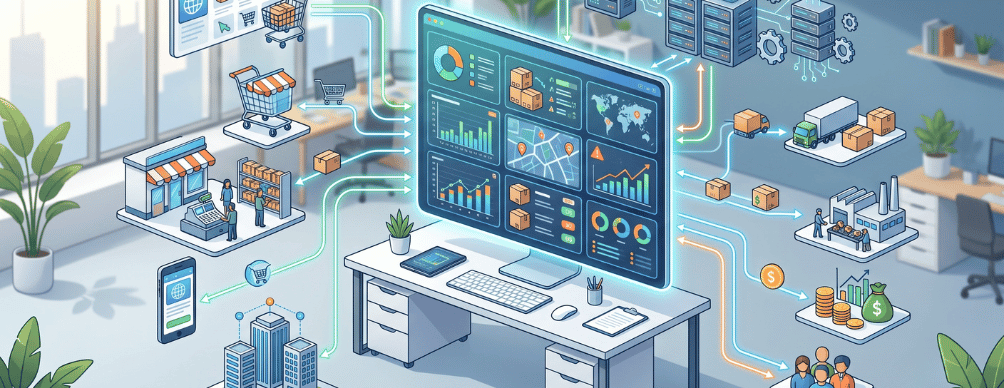
The CRM workflow described throughout this guide is most powerful and most practical to maintain when it runs on a platform where the physical store operations and the digital commerce infrastructure share a single data layer. When the POS system, the online store, the WhatsApp integration, and the CRM are separate tools that do not automatically synchronise with each other, the workflow requires constant manual data management to keep customer profiles accurate and communication sequences correctly triggered.
This integration challenge is the reason many retail businesses that attempt offline-to-online CRM workflows abandon them within the first three months. The manual effort of exporting customer data from the POS, importing it into the CRM, cross-referencing with online store orders, and maintaining accurate segment membership becomes unsustainable at any meaningful customer volume. Zyfoo Commerce Cloud is designed to eliminate this friction by connecting the physical store billing, inventory, online store, and CRM into a single platform where every customer interaction, regardless of whether it happens at the counter or through the website, updates the same profile and triggers the same workflow.
When a walk-in customer is captured into Zyfoo CRM at the billing counter and linked to a WhatsApp number, their profile automatically captures that first purchase and initiates the onboarding workflow. If that same customer places an order through the online store three weeks later, the online order is automatically attributed to the same profile, updating their purchase frequency, their category preferences, and their segment classification without any manual intervention. When they browse the online store and view a product without purchasing, that browsing behaviour is available to the CRM workflow as a trigger for a targeted follow-up communication.
For retail businesses evaluating whether a unified platform or a combination of separate specialist tools is the right approach, the comparison between Zyfoo and Shopify is worth reviewing for a direct comparison of how built-in CRM and communication capabilities in an integrated platform compare to the plugin-based approach that typically requires separate CRM and marketing automation tools connected through third-party integrations. The practical difference in day-to-day maintenance effort and data accuracy is significant, particularly for retail businesses that do not have a dedicated technology team to manage the connections between tools.
The Competitive Advantage of Owning the Customer Relationship
The walk-in customer who comes into a store, makes a purchase, and leaves without a digital connection to the brand is a customer the business cannot retain with any consistency. They may return. They probably will not return as often as they would if the brand maintained a relevant, personalised presence in their life between visits. They will almost certainly drift toward whichever brand next presents them with a timely and relevant offer through a channel they actually check.
The retail businesses in India that are building genuine competitive advantages in 2026 are not primarily the ones with the lowest prices or the widest product ranges. They are the ones that own the customer relationship across channels. They know who their best customers are, what those customers consistently buy, when they are likely to need something new, and how to reach them with the right message at the right moment. That knowledge is the output of a CRM workflow that begins at the billing counter and extends seamlessly into every digital channel the customer uses.
Building this workflow is not a large or complex project. It begins with a single decision: to capture the phone number of every walk-in customer by offering a genuine value exchange in return. From that first capture, the workflow builds itself, one stage at a time, one customer interaction at a time, adding data and deepening the relationship with every purchase and every communication. Within six months of consistent implementation, the difference in repeat purchase rate, average customer lifetime value, and online channel revenue between the businesses that built this workflow and those that did not becomes visible in the numbers.
The retail businesses that treat customer relationships as assets to be built and maintained, rather than transactions to be completed and forgotten, are the ones that compound their advantage month over month. The technology to build this capability is accessible, the workflow is straightforward, and the commercial impact is measurable. The only variable is the decision to start.