
GST Invoicing for Ecommerce Sellers: Getting the Basics Right from Day One

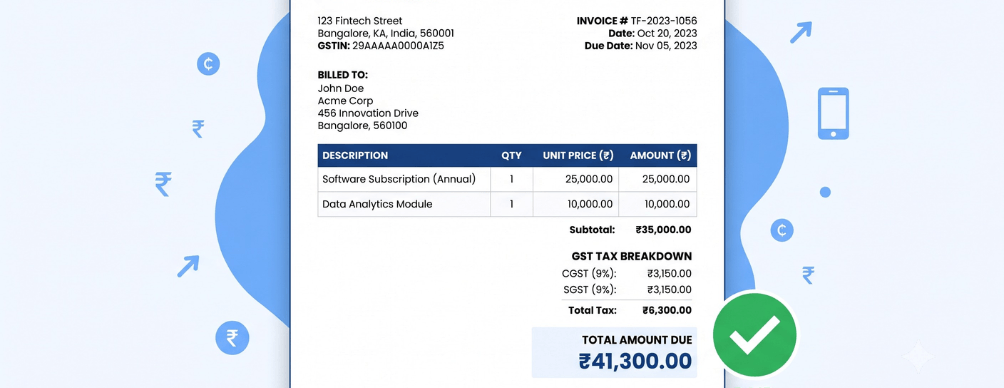
Every ecommerce seller in India registered under GST has to issue invoices that meet a specific set of requirements, and getting this wrong from day one creates cleanup work that grows more painful the longer it goes unaddressed. This is not a topic most first time sellers think about before their first sale, which is exactly why so many end up retrofitting invoice formats and reconciling months of non compliant records later. This guide covers the actual basics of GST invoicing for an online store, what a compliant invoice needs to contain, when e-invoicing applies, and the common mistakes that show up during audits. Sellers running their billing through Zyfoo’s GST integration tend to avoid most of these issues simply because the platform generates invoices in the required format automatically, but understanding the underlying rules still matters for anyone managing their own compliance.
What a GST Compliant Invoice Must Contain
A valid GST invoice is not just a receipt with a tax line added. It needs the seller’s name, address, and GSTIN, the invoice type, a serial number that is unique and sequential for the financial year, the recipient’s details including GSTIN if they are a registered business, and a clear breakdown of taxable value, tax rate, and tax amount split correctly between CGST, SGST, or IGST depending on whether the sale is intra state or inter state. HSN codes for the goods sold are also mandatory above certain turnover thresholds, and getting the wrong HSN code on a product listing is a common, quietly compounding error that only surfaces when a buyer or an auditor checks the code against the actual product category. For an online store, this means invoice generation cannot be an afterthought bolted onto the checkout flow, it needs to pull the correct GSTIN, HSN code, and place of supply for every single order automatically, since manually checking each order does not scale past a handful of daily sales.
| Field | Why It Is Required |
| Seller GSTIN and address | Identifies the registered supplier |
| Sequential invoice number | Required for audit trail continuity |
| HSN code and tax split | Confirms correct tax rate applied |
Intra State vs Inter State: Getting the Tax Split Right
One of the most common invoicing errors for new ecommerce sellers is applying the wrong tax split based on where the buyer is located relative to the seller’s registered state. A sale within the same state splits tax evenly between CGST and SGST, while a sale to a buyer in a different state charges IGST instead, at the same combined rate but reported differently. This matters because an ecommerce store, by nature, ships across state lines constantly, and an invoicing system that defaults to one split regardless of the buyer’s actual state produces invoices that are technically non compliant even if the total tax amount collected happens to be correct. This is exactly the kind of error that goes unnoticed for months because the buyer rarely checks the tax breakdown, and it only surfaces during a GST return reconciliation or an audit.
E-invoicing: When It Applies and What Changes
E-invoicing under GST requires businesses above a specified turnover threshold to report every invoice to the government’s Invoice Registration Portal before it is considered valid, a process documented on the official e-invoice portal. Once reported, the portal returns a unique Invoice Reference Number and a QR code that must appear on the invoice given to the buyer. For a growing ecommerce seller, crossing this turnover threshold usually happens gradually rather than as a single dramatic jump, which means the invoicing system needs to be ready before the threshold is crossed rather than after, since retroactively generating e-invoices for a backlog of orders is far more painful than having the integration ready in advance. Sellers who wait until they technically cross the threshold to think about e-invoicing usually spend the following month reconciling a gap between what should have been reported and what actually was.
Automate GST Invoicing
Credit Notes, Debit Notes, and Order Cancellations
Ecommerce sellers deal with returns and cancellations far more often than typical businesses, and each of these needs its own compliant document rather than simply deleting or editing the original invoice. A return after a completed sale requires a credit note referencing the original invoice number, reducing the tax liability reported for that period, while a price correction after invoicing requires a debit or credit note depending on the direction of the change. Editing an already issued invoice directly, rather than issuing the correct supplementary document, is a common shortcut that creates a mismatch between what was reported and what the records actually show, and this mismatch is exactly the kind of discrepancy that surfaces during return filing reconciliation. Building credit note generation into the returns workflow, so that a processed return automatically produces the correct document, closes this gap the same way automating the original invoice does.
Common GST Invoicing Mistakes Ecommerce Sellers Make
The most frequent mistake is treating invoice generation as a manual, end of day task rather than something tied directly to the order confirmation flow, which inevitably leads to missed invoices, especially during high order volume periods like festive sales. A close second is applying an incorrect HSN code across an entire product category because one item was coded correctly and the rest were copied without verification, an error that can go unnoticed until a tax consultant reviews the full product catalogue at year end. Sellers also commonly forget to update their invoice format when GST rates change for a category, continuing to bill at an old rate for weeks after a rate revision takes effect. Finally, many sellers do not reconcile their invoice records against their GST returns on a monthly basis, which means discrepancies between what was invoiced and what was actually reported accumulate quietly until the annual return forces a reconciliation that could have been caught and fixed much earlier with a monthly check.
| Mistake | Fix |
| Manual, delayed invoice generation | Automate invoicing at order confirmation |
| Incorrect HSN code copied across catalogue | Verify HSN per product category |
| Missed monthly reconciliation | Match invoices against returns monthly |
Building Invoicing Into the Order Flow, Not Around It
The sellers who stay compliant without ongoing stress are the ones who treat GST invoicing as part of the order confirmation step rather than a separate accounting task handled later. This means the correct GSTIN, place of supply, HSN code, and tax split need to be calculated automatically the moment an order is placed, not reconstructed afterward from order data that was not captured with tax compliance in mind. Platforms built for Indian sellers, including the billing and GST tools inside Zyfoo, handle this calculation natively so that every invoice generated already reflects the correct split and format without a manual review step, which matters more as order volume grows and manual review of every invoice stops being realistic. Sellers exploring how this fits alongside their broader operations can browse the Zyfoo blog for related guides on billing and reconciliation.
Record Keeping and Staying Audit Ready
GST law requires invoices and related records to be retained for a set number of years, and an ecommerce seller generating hundreds or thousands of invoices a month cannot rely on scattered spreadsheets or downloaded PDFs to meet that requirement reliably. A structured system that stores every invoice against its corresponding order, return, or credit note, with the ability to pull a complete set of records for any given period in minutes rather than days, is what actually makes an audit manageable rather than stressful. This matters most during an actual audit or scrutiny notice, where the ability to produce a clean, complete invoice trail quickly is often what separates a routine verification from an extended, costly review. Sellers who only think about record keeping once a notice arrives are almost always working with incomplete records by that point, since the gaps tend to be in the early months of the business when invoicing discipline was weakest.
GST invoicing is one of those compliance areas where the basics genuinely do most of the work. A seller who gets the invoice fields, the tax split logic, and the e-invoicing threshold right from the first sale spends very little ongoing time on it, while a seller who treats it as an afterthought ends up doing the same work later under audit pressure, with penalties and interest attached to what would have been a straightforward fix at the start. Building GST invoicing into the order flow from day one, rather than bolting it on after growth forces the issue, is the difference between compliance being routine and compliance being a recurring fire drill.