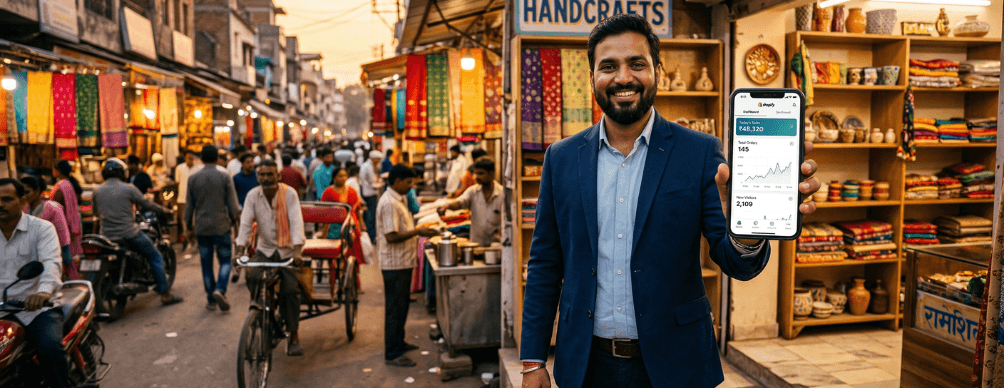
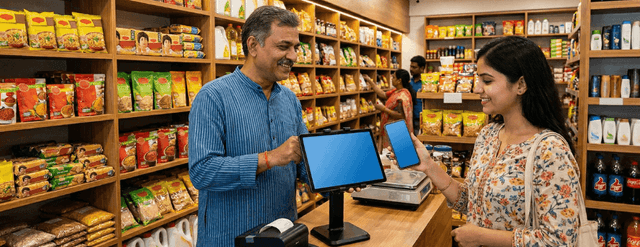
There is a particular kind of momentum that builds in a local store over years. Regular customers who know your name. Products that have quietly earned trust. A reputation that does not come from advertising but from showing up, again and again, in the same neighbourhood. That foundation is worth more than most founders who start online from scratch will ever have. What it does not do on its own is scale. The ceiling on a physical-only business is real. Rent limits how big you can get. Geography limits who can find you. Hours limit how much you can sell. In 2026, the path from that local foundation to a genuine online brand is more accessible than it has ever been, and the Indian market is at a particularly interesting moment to make that move. This is the roadmap for that journey.
Why 2026 Is the Right Year to Make This Move
India s ecommerce market has crossed a point where going online is no longer a risk to manage. It is a gap to close. According to research published by the India Brand Equity Foundation, India s ecommerce market is expected to reach 350 billion dollars by 2030, growing at a compound annual rate that outpaces most other major economies. A significant share of that growth is coming not from large marketplaces alone but from independent D2C brands that have built direct relationships with buyers. The buyers are there. The logistics infrastructure, with coverage now reaching Tier 2 and Tier 3 cities in a way that was not possible five years ago, is there. The payment rails, UPI, wallets, COD, EMI options, have matured. What has changed most is the availability of platforms that do not require a large technical team or a significant upfront investment to get a real online store running. The question for a local business owner in 2026 is not whether to go online. It is how to do it in a way that actually builds a brand, not just opens a listing.
Stage One: Build Your Digital Foundation Before You Scale
The most common mistake local businesses make when going online is rushing to list products and run ads before the foundation is solid. A shaky digital foundation means every rupee spent on growth produces less than it should. Your digital foundation has four components that all need to be in place before you accelerate. Your own storefront. Not just a marketplace listing. An owned URL, a store that carries your brand identity, your story, your customer experience. Marketplaces are traffic channels, not brand homes. When a customer buys from you on a marketplace, they are buying from the marketplace. When they buy from your own store, they are buying from you. That relationship is what a brand is built on. Clean product data. Every product needs a clear name, an accurate description, a correct price, and at least three quality images. This is not optional and it is not something to fix later. Product data quality directly affects your search visibility, your conversion rate, and your return rate. A reliable fulfilment setup. Before you drive traffic to your store, know how you will pack and ship an order. This means having a courier account, a packaging process, and a clear idea of your dispatch time. A working payment flow. Test your checkout from a real device before any customer sees it. COD, UPI, and card payments should all work without friction.
Stage Two: Know Exactly What You Are Selling and to Whom
Local businesses often carry broad catalogues because physical space and supplier relationships make it easy to stock a wide range of products. Online, breadth without depth creates a confusing brand signal. Before scaling, define your primary product category with honesty. Not what you have in your store, but what your best-selling, highest-margin, most distinctive products actually are. Those are the products you build your online brand around first.
| Question to Answer | Why It Matters |
| What are your top 5 products by margin? | These fund your growth |
| What do repeat customers always come back for? | This is your brand anchor |
| What do customers refer others to you for? | This is your differentiation |
The answers to these three questions tell you more about your brand positioning than any agency brief. A local sweet shop that discovered its jackfruit halwa was what customers drove across the city for built an entire online brand around that one product line, and grew it nationally. That kind of focus is what makes D2C work.
Stage Three: Set Up Operations That Can Handle 10x Volume
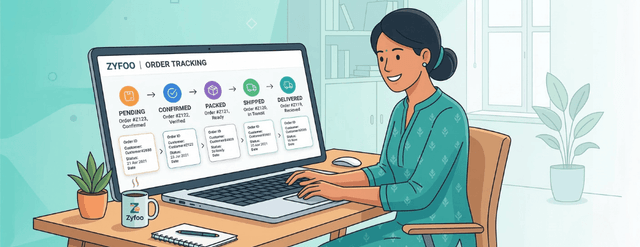
The most growth-limiting mistake in ecommerce is building operations for today s order volume. When traffic comes, it does not come gradually. A single WhatsApp share, a feature in a regional news outlet, or a well-performing Instagram reel can bring 50 orders in a day to a business that normally ships 5. Operations built for 5 orders a day will break at 50. The way to avoid this is to set up for scale at the beginning, using a platform that handles the operational complexity so you do not have to hire a team to manage it. Inventory management should not live in a notebook or a spreadsheet. It should update automatically when an order is placed, alert you when stock is low, and give you a clear view of which products are moving fastest. Order processing should have a defined workflow: new order received, payment confirmed, stock allocated, dispatch initiated, tracking updated. Every step should be visible in one place, not scattered across WhatsApp messages and email threads. Customer communication should be automated for routine touchpoints: order confirmation, dispatch notification, delivery update. These messages build trust without requiring your time. Zyfoo Commerce Cloud is built specifically for this kind of operational readiness, bringing inventory, order processing, CRM, and customer communication into a single platform so local businesses can scale without adding operational headcount to match every growth milestone.
Stage Four: Build the Brand Layer That Marketplaces Cannot Give You
Selling on Amazon or Flipkart is a revenue channel, not a brand strategy. It is a useful channel for certain products and certain stages. But every sale on a marketplace is a sale that builds someone else s customer relationship, not yours. The brand layer is what makes the difference between a business that depends on platform algorithms and a brand that owns its audience. Your story! Why did you start this business? What makes your products different? Who do you make them for? This does not need to be elaborate. A two-paragraph founder story on your About page is more powerful than most local businesses realise, because most local businesses never write one. Your visual identity! Consistent logo, consistent colours, consistent packaging. A customer who receives an order from you and sees your brand on the box, on the thank-you card, and on the follow-up WhatsApp message is experiencing brand consistency. That experience is what makes them come back and refer others. Your content! Product pages are not content. Blog posts, how-to guides, recipe videos if you sell food, care instructions if you sell clothing, comparison guides if you sell electronics. Content builds organic discovery over time, which is the only form of traffic that compounds without ongoing ad spend.
Stage Five: Drive Targeted Traffic, Not Just Any Traffic
Many local businesses spend their first online marketing budgets on generic reach. Boosting a post to people interested in shopping in a broad geography. Running Google Ads on keywords that are too broad to convert. This produces clicks without customers.
Targeted traffic for a D2C brand in India in 2026 means:
- Hyperlocal to regional expansion. Start with the geography where your brand already has recognition. Target customers in your city first. Convert them, get reviews, get referrals. Then expand to the next radius.
- Category-specific keywords. If you sell artisanal ghee, buy ghee online India is a more valuable keyword than buy grocery online India, even though the second has more search volume. Your conversion rate on the specific keyword will be 3 to 5 times higher.
- WhatsApp and loyalty loops. The customers you already have are your cheapest acquisition channel. A WhatsApp broadcast to 500 existing customers announcing a new product or a limited batch will outperform a cold ad campaign to 50,000 strangers in terms of revenue per rupee spent.
Think with Google s research on Indian digital consumers consistently shows that personalised, vernacular communication drives significantly higher engagement from Indian shoppers compared to generic English-language campaigns. This matters especially for brands moving from local markets where personal connection has always been the selling point.
Stage Six: Manage Your Finances Like a Brand, Not a Shop
One of the most common failure modes in the local-to-online transition is treating online revenue as an extension of the cash till. It is not. Online revenue comes with platform fees, return rates, delivery costs, packaging costs, payment gateway charges, and advertising spend, each of which needs to be tracked separately to understand whether growth is actually profitable.
| Cost Category | What to Track | Why It Matters |
| Cost of Goods | Per-unit production or procurement cost | Baseline for margin calculation |
| Fulfilment Cost | Packaging, courier, RTO per order | Often underestimated by new sellers |
| Customer Acquisition | Ad spend divided by new orders | Determines if growth is sustainable |
A business that grows from 50 orders a month to 500 orders a month but has not tracked these numbers may discover at month six that it has been growing at a loss. Catching this early requires a financial discipline that feels unnecessary when volume is small but is critical when volume starts to move.
Stage Seven: Build Retention Before You Double Acquisition
The growth trap in ecommerce is spending aggressively on acquisition while ignoring the customers already won. Acquiring a new customer costs between five and seven times more than retaining an existing one. For a local business going online, where the brand often starts with personal relationships and community trust, retention should be the priority before acquisition is scaled up. Retention in practice means:
- A customer who bought once should receive a follow-up within 7 days. Not an aggressive upsell, but a check-in. Did the product arrive in good condition? Are they satisfied?
- A customer who bought twice should be in your loyalty programme or receive early access to new products or limited batches.
- A customer who bought three or more times is your advocate. They are the people who will share your brand without being asked. Give them a reason to feel like insiders.
The Zyfoo CRM module is designed for exactly this kind of tiered relationship building, letting you segment customers by purchase history and automate the right communication at the right stage without managing it manually. Businesses like Petkadai, which started as a local aquarium shop and scaled into a nationally recognised online pet store, built their retention engine before their acquisition engine, and that sequencing is a large part of why their growth was sustainable.
Stage Eight: Expand Your Catalogue Strategically
Once your core products are performing online and your operations are stable, the instinct is to expand the catalogue quickly. In a physical store, breadth is a competitive advantage because it keeps customers in the store longer. Online, breadth without strategy dilutes your brand signal and creates inventory risk. Expand by adding adjacent products that serve the same customer, not by adding unrelated products because you can source them cheaply. If your core business is organic spices, expanding into organic cooking pastes, oil-free masalas, or heirloom grain flours all serves the same customer with a higher basket size. Expanding into kitchenware or packaged snacks does not. Each category expansion should be treated as a mini launch. Dedicated landing page, targeted keywords, specific audience segment, and a clear six-week timeline to assess whether the new category is working.
Stage Nine: Use Data to Make Your Next Decision, Not Your Last Instinct
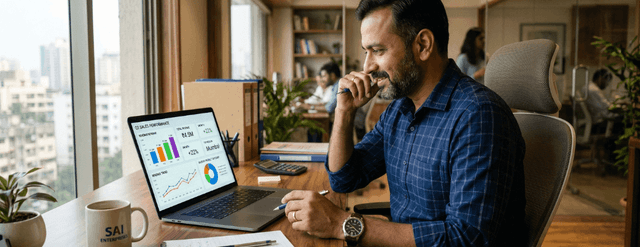
Local businesses run on instinct and that instinct is often good because it is built on years of direct customer feedback. But instinct does not scale to 5,000 customers across five cities. At that point, data has to take over as the primary input to decisions about what to stock, what to promote, and what to discontinue. The metrics that matter most for a scaling D2C brand in India are: Revenue per product category, tracked weekly. This tells you where demand is accelerating and where it is softening before a stockout or overstock becomes a problem. Repeat purchase rate, tracked monthly. If fewer than 20 percent of your customers buy a second time within 90 days, your product or post-purchase experience needs attention before you spend more on acquisition. Return rate by SKU. A return rate above 5 percent on any individual product is a signal worth investigating before that product is promoted more heavily. The businesses that scale from local stores to national brands in India are not always the ones with the best products. They are the ones that combine good products with operational discipline, data-led decision making, and a platform infrastructure that lets them focus on growth rather than on managing tools.
Stage Ten: Think Like a Brand Owner, Not a Shop Owner
The final shift in the local-to-online journey is not operational. It is mental. A shop owner thinks about this week s sales. A brand owner thinks about this year s positioning. That shift shows up in small decisions. A brand owner turns down a low-margin bulk order because it does not serve the customer segment they are building for. A brand owner invests in packaging that costs Rs 12 more per order because it creates an unboxing experience customers photograph and share. A brand owner writes a product description that tells a story rather than just listing specifications. None of these decisions are expensive. All of them compound over time into something a shop can never become: a brand that customers choose because of what it stands for, not just what it sells. If you are a local business owner reading this in 2026 with a physical store, a loyal customer base, and products worth talking about, the infrastructure to make that move is already in place. The comparison between being a great local shop and becoming a recognised online brand is no longer a question of resources. It is a question of sequencing, consistency, and the willingness to build one stage at a time. Explore how Zyfoo Commerce Cloud brings the full platform infrastructure for every stage of that journey into a single, India-built, SMB-focused solution.