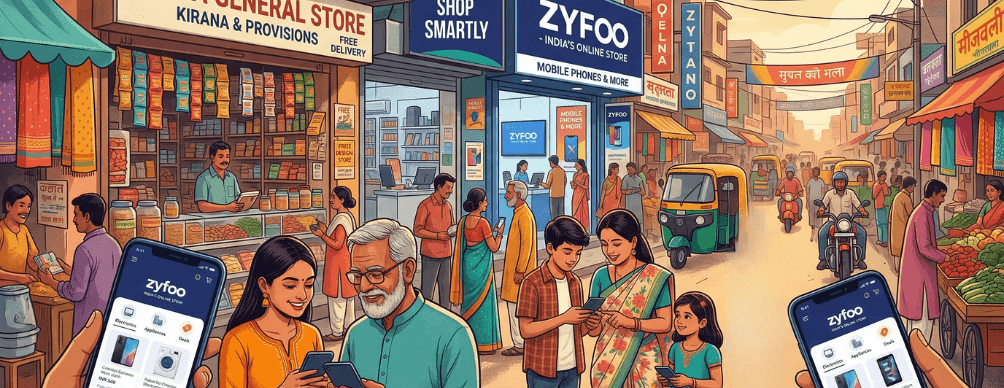
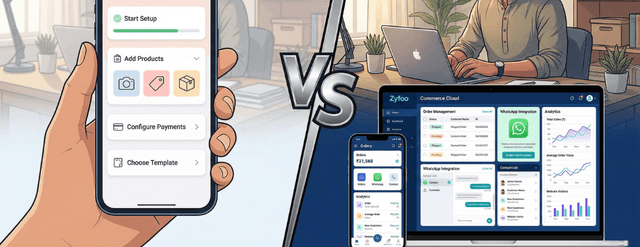
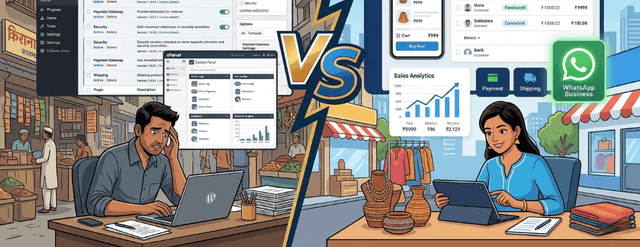
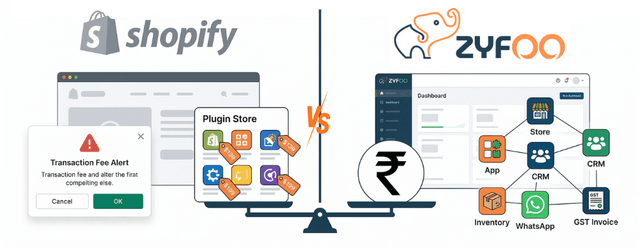
Something fundamental has changed in how Indian consumers discover products, compare prices, and complete purchases. The smartphone is no longer a supplementary shopping device. It is the primary retail interface for hundreds of millions of buyers across metro cities, small towns, and rural districts alike. Mobile commerce in India is not a trend in the early adoption phase. In 2026, more than 75 percent of all eCommerce transactions in India are estimated to originate from a mobile device. That figure alone is significant, but what makes it transformative for Indian retailers is the demographic breadth behind it. The mobile shopper in India is not a niche customer profile. It is a first-generation internet user in Madhya Pradesh buying agricultural inputs, a college student in Coimbatore purchasing streetwear, and a working professional in Pune ordering grocery refills on the commute home. For Indian SMB retailers and D2C brands, this shift creates both an urgent pressure and a generational opportunity. The merchants who build their operations around the mobile experience today will hold a structural advantage as India s digital consumer base continues to grow. For brands operating on Zyfoo s mobile-first commerce platform, the infrastructure is already there. For everyone else, the question is how quickly they can close the gap.
How Big Is Mobile Commerce in India in 2026?
The scale of mobile commerce in India is difficult to fully appreciate without looking at the underlying connectivity numbers. India now has over 900 million active smartphone users, making it the second largest smartphone market in the world after China. The combination of affordable Android devices, Jio s data revolution, and the UPI payment infrastructure has created conditions where mobile commerce growth is structurally embedded in the country s consumption story.
| Metric | 2023 Figure | 2026 Estimate |
| Active smartphone users | 650 million | 900 million+ |
| Mobile share of eCommerce transactions | 65 percent | 75 percent+ |
| UPI transactions per month | 10 billion | 18 billion+ |
| Tier-2 and tier-3 city online buyers | 280 million | 420 million+ |
| Average time spent on shopping apps daily | 22 minutes | 31 minutes |
These figures reflect a market that has moved well past the inflection point. The infrastructure question has been answered. Connectivity is pervasive, devices are affordable, and digital payments are embedded in daily behavior. The remaining question for retailers is whether their product discovery experience, storefront speed, checkout flow, and post-purchase communication are genuinely optimized for mobile, or whether they are desktop experiences that technically load on a phone.
Where Indian Mobile Shoppers Are Actually Spending
Understanding where Indian mobile commerce spend is concentrated helps retailers prioritize their category strategy and channel investment. The distribution of mobile commerce spend in India is significantly different from Western markets, shaped by local preferences, climate, payment behavior, and the specific needs of India s tier-2 and tier-3 consumer base.
Fashion and Apparel
Fashion remains the largest category for mobile commerce in India by order volume. The combination of low average order values, high return tolerance among platform buyers, and strong social discovery through Instagram and YouTube Shorts has made fashion the category where mobile purchase behavior is most deeply entrenched. Vernacular content in Tamil, Telugu, Kannada, Bengali, and Hindi drives a significant share of product discovery for regional fashion buyers.
Grocery and Daily Essentials
Quick commerce has fundamentally changed grocery behavior in Indian metros. The ability to order and receive groceries within 10 minutes from a dark store has shifted habitual grocery runs for urban households. Blinkit, Swiggy Instamart, and Zepto have built this expectation, and it is now being replicated by regional and category-specific players who want a direct relationship with their customers rather than platform dependency.
Consumer Electronics and Accessories
Mobile accessories, earphones, smart home devices, and refurbished electronics are among the fastest-growing mobile commerce categories in India. The price sensitivity of the Indian consumer, combined with easy EMI options through platforms and payment gateways, makes electronics highly suited to impulse purchase behavior on mobile.
Health, Wellness, and Beauty
D2C personal care and wellness brands have found mobile as their primary acquisition channel. Short-form video content on Instagram Reels and YouTube Shorts creates product awareness that converts directly to purchase, often within the same session. Categories like skincare, nutrition supplements, and ayurvedic products have seen the sharpest growth in mobile-first D2C adoption.
| Category | Mobile Commerce Penetration | Primary Discovery Channel |
| Fashion and Apparel | Very High (80%+ of orders) | Instagram, YouTube Shorts, Meesho |
| Grocery and Daily Essentials | High (70%+ in metro areas) | Direct app, WhatsApp reminder |
| Consumer Electronics | High (65%+ of orders) | YouTube reviews, Google Search |
| Health and Beauty D2C | Very High (75%+ of orders) | Instagram Reels, influencer content |
| Home and Kitchen | Moderate (50%+ of orders) | Pinterest, Google Shopping |
The Anatomy of a High-Converting Mobile Store
Most Indian SMB retailers understand that they need a mobile-friendly store. Fewer understand the specific design and performance principles that separate a store that converts mobile visitors at 3 percent from one that converts at 7 to 9 percent. The difference is not primarily visual design. It is speed, friction reduction, and trust signaling.
Page Load Speed Is Revenue
Google s research consistently shows that for every one-second improvement in mobile page load time, conversion rates improve by 3 to 5 percent. In India, where a significant share of mobile traffic still runs on 4G connections in areas with variable signal quality, page load speed is especially consequential. A mobile product page that takes more than 3 seconds to load will see more than 50 percent of visitors abandon before the page is fully rendered. Speed optimization for mobile commerce in India requires image compression, lazy loading of below-the-fold content, minimal JavaScript blocking the render path, and ideally a content delivery network with edge nodes in Indian data centers. These are not advanced optimizations. They are baseline requirements for any store that wants to compete for the Indian mobile shopper s attention.
Thumb-Zone Navigation
The ergonomics of smartphone use have created a specific behavioral pattern that most mobile users are not consciously aware of but that directly shapes how they navigate a store. The thumb zone, the area of a mobile screen that is most naturally reachable with one hand, covers roughly the bottom half of the screen. Critical navigation elements like category menus, search, add-to-cart, and checkout buttons need to be in this zone. Retailers who place these elements at the top of the screen create friction that reduces conversion.
Streamlined Checkout Flow
Every additional step in the checkout flow reduces the probability of a completed purchase. For Indian mobile commerce, the ideal checkout flow is: product page, single-page checkout with auto-filled delivery address, UPI or saved card payment, and order confirmation. Requiring account creation before purchase is one of the highest-friction checkpoints in mobile eCommerce and should be replaced with guest checkout backed by optional post-purchase account creation.
Trust Signals Appropriate for the Indian Market
The Indian mobile shopper, particularly in tier-2 and tier-3 markets, looks for specific trust signals before completing a first purchase from an unfamiliar brand. These include visible customer reviews with photos, clear return and refund policy language, recognizable payment gateway logos (Razorpay, PayU, UPI, GPay), COD availability, and FSSAI or relevant certification marks for consumable products. These signals address the trust deficit that many first-time buyers from smaller cities experience when shopping from a brand they have not encountered before.
WhatsApp Commerce: The Most Underutilized Mobile Channel in Indian Retail
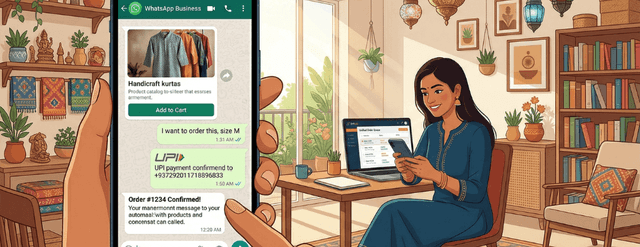
India has over 500 million WhatsApp users, and for a significant segment of Indian buyers, particularly in the 35 to 55 age group and in non-metro markets, WhatsApp is not just a communication tool. It is the primary digital interface through which they manage everything from banking alerts to product discovery to customer support conversations. WhatsApp Commerce as a structured channel, meaning a system where customers can browse a product catalog, place an order, select a payment method, and receive order confirmation entirely within WhatsApp, has moved from an experiment to a proven revenue channel for Indian D2C brands. The key is having a backend system that can handle WhatsApp orders with the same structure and automation as a website order.
How WhatsApp Commerce Works in Practice
A customer discovers a product through a WhatsApp broadcast from a brand they follow. They reply with interest, browse a catalog within WhatsApp Business, select a product variant, and receive an order summary with a UPI payment link. The payment is completed, an order confirmation is sent automatically, and the customer receives tracking updates at each stage. The entire transaction happens without the customer leaving WhatsApp. This is not a future capability. It is live and operational for brands using Zyfoo s WhatsApp commerce integration. The businesses capturing this channel today are building direct customer relationships that do not depend on marketplace algorithms or app download conversion rates.
| Channel | Average Conversion Rate | COD Share | Repeat Purchase Rate |
| Website (mobile) | 2 to 4 percent | 40 to 55 percent | 25 to 35 percent |
| WhatsApp Commerce | 8 to 15 percent | 30 to 45 percent | 45 to 60 percent |
| Branded Mobile App | 5 to 9 percent | 35 to 50 percent | 50 to 65 percent |
| Marketplace (mobile) | 3 to 6 percent | 50 to 65 percent | 15 to 20 percent |
The conversion and retention data for WhatsApp commerce reflects the fundamentally different nature of the channel. A customer who receives a WhatsApp message from a brand they have opted into has already indicated intent. They are not browsing anonymously. The relationship is personal, which is why conversion rates are significantly higher than anonymous web traffic.
The Branded Mobile App Advantage for Indian Retail
For SMBs that have passed the 200 orders per day threshold, a branded mobile app moves from a nice-to-have to a meaningful competitive differentiator. The behavioral economics of app-based commerce favor retailers significantly over browser-based mobile shopping.
Why Apps Convert Better Than Mobile Web
A mobile app is faster to load because assets are cached on the device. It sends push notifications that achieve open rates of 30 to 40 percent compared to 15 to 20 percent for email. It stores payment credentials so checkout becomes a two-tap process. It can use device sensors for features like AR try-on for fashion and home decor. And it creates a dedicated presence on the customer s home screen that serves as a constant brand reminder. The loyalty differential between app users and mobile web users is particularly striking in the Indian context. App-first customers in Indian eCommerce typically have 2 to 3 times higher lifetime value than customers who shop exclusively through a browser, driven by higher purchase frequency and larger average order values.
The Barrier to Entry Has Dropped Significantly
Historically, a branded mobile app required a significant investment in iOS and Android development, ongoing maintenance, and a dedicated tech team for updates. That equation has changed. Platforms like Zyfoo provide a branded Android app as part of the standard platform offering, which means an SMB retailer with no technical background can have a fully functional, branded mobile storefront on the Google Play Store without writing a line of code or hiring a developer.
Mobile Payments: The Infrastructure That Makes It All Work
Mobile commerce in India would not have reached its current scale without the UPI payment infrastructure. UPI has removed the primary friction point in digital commerce for the Indian market, which was the complexity of entering card details on a small mobile screen or the distrust of saving card credentials with an unknown merchant.
The UPI Effect on Mobile Conversion
UPI payments complete in 2 to 4 seconds, require only a PIN entry, and are available through every major banking app in India. For mobile commerce, this translates directly to fewer abandoned carts at the payment step. Merchants who make UPI the prominent first payment option on their checkout page consistently report 15 to 25 percent higher payment completion rates compared to merchants who lead with card payment forms.
Cash on Delivery Still Matters
Despite UPI s dominance, COD remains an important payment option for Indian mobile commerce, particularly for first-time buyers from tier-2 and tier-3 markets, for high-value orders where buyers want delivery confirmation before payment, and for categories with high return rates where buyers are cautious about prepaying. The right approach is not to eliminate COD but to design the checkout experience so prepaid options are presented first with clear value incentives such as faster shipping or a small discount.
Buy Now Pay Later for Mobile Commerce
BNPL adoption in Indian mobile commerce has accelerated with the integration of platforms like Simpl, ZestMoney (prior to its closure), and bank-backed EMI options directly into checkout flows. For electronics, fashion, and home goods in the Rs 1,500 to Rs 15,000 range, BNPL options materially increase conversion by removing the single-payment barrier for price-sensitive buyers.
| Payment Method | Best For | Mobile Conversion Impact |
| UPI (GPay, PhonePe, Paytm) | All buyers, all categories | Highest, leads to fewer drop-offs |
| Saved Card / Tokenization | Repeat buyers with app accounts | High for app users, low for first-time |
| Cash on Delivery | New buyers, tier-2/3 markets | Essential for first-purchase trust |
| BNPL / EMI | Electronics, fashion Rs 3,000+ | Increases AOV and conversion for price-sensitive buyers |
Mobile Commerce and the Rise of Social Commerce in India
Social commerce, where product discovery, consideration, and purchase happen within or directly from a social platform, has become one of the fastest-growing segments of Indian mobile commerce. Instagram, YouTube, and more recently Meesho and ONDC are functioning as product discovery engines with increasing purchase completion within the same session.
Instagram as a Commerce Channel
Instagram Shopping and Instagram Checkout (available through certain payment integrations) allow D2C brands to tag products in posts and Reels, enabling a buyer to move from content to product page to checkout without leaving the app. For fashion, beauty, and home decor brands targeting the 18 to 35 demographic, Instagram has become a primary acquisition channel with measurable return on ad spend.
Longer product review videos on YouTube drive high-intent purchase behavior among Indian consumers who research before buying, particularly in electronics, appliances, and health supplements. Brands that invest in YouTube content or partner with regional review creators are generating search-based mobile commerce traffic that has significantly longer retention than social ad traffic.
ONDC: The Open Network Opportunity
The Open Network for Digital Commerce (ONDC) is a government-backed protocol that allows any seller to list products and any buyer to discover them through any ONDC-connected app, without being locked into a single marketplace. For Indian SMBs, ONDC represents an opportunity to reach mobile buyers who are using Paytm, PhonePe, or Magicpin as their primary shopping interface without paying the high commission rates of traditional marketplaces. The ONDC official platform provides updated onboarding information for sellers looking to participate.
Mobile Commerce for Tier-2 and Tier-3 India: The Real Growth Frontier
The narrative around Indian mobile commerce has historically been dominated by metro city consumer behavior. Increasingly, the most significant growth opportunity sits in India s smaller cities and rural areas, where mobile commerce adoption is still in an earlier phase but the trajectory is steep.
What Is Different About Tier-2 and Tier-3 Mobile Shoppers
Buyers in tier-2 and tier-3 cities have distinct behavioral patterns that require deliberate design choices. They are more likely to be first-generation digital buyers who have higher trust requirements before completing a purchase from an unfamiliar brand. They are more likely to prefer COD. They shop primarily in vernacular languages, which means a Hindi, Tamil, or Telugu UI can materially improve engagement and conversion. And they are more likely to be influenced by peer recommendations through WhatsApp groups than by Instagram influencer content. These differences are not barriers. They are design parameters. Brands that build mobile stores with vernacular language support, COD as a visible primary option, WhatsApp-based customer support, and clear product photography optimized for low-bandwidth connections will outperform brands that simply export their metro-first experience to smaller markets.
Voice Commerce and Vernacular Search
Voice search usage on mobile in India has grown significantly with the maturation of Google Assistant and Siri in regional languages. A meaningful and growing share of product searches in India are conducted by voice, particularly by users who are more comfortable speaking than typing in English or who are using a device for the first time. Optimizing product titles and descriptions for conversational vernacular search queries is an emerging but real mobile commerce SEO practice.
| Tier-2 and Tier-3 Mobile Commerce Requirement | Implementation Priority |
| Vernacular language storefront support | High: directly impacts bounce rate and conversion |
| COD as a primary checkout option | High: non-negotiable for first-purchase trust |
| WhatsApp-based order support and updates | High: preferred communication channel |
| Lightweight page design for slower connections | Medium-High: affects load time and session depth |
| Voice search optimized product metadata | Medium: growing in importance through 2026 |
For Indian D2C brands, mobile performance marketing, primarily through Meta (Facebook and Instagram) and Google, is the dominant paid acquisition channel. The mobile-first nature of Indian internet use means that virtually every performance marketing campaign runs primarily on mobile placements, whether or not the advertiser has specifically optimized for it.
Mobile-Specific Ad Creative Requirements
Video ads in the 9:16 aspect ratio (vertical video) consistently outperform square or horizontal formats on mobile placements in India. The first 3 seconds of a video ad carry disproportionate weight because users scroll past content rapidly. Ads that show the product clearly, in use, within the first 2 seconds, with a visible price point and a vernacular language caption, tend to generate significantly better cost-per-click metrics in the Indian market.
Landing Page and Ad Continuity
One of the most common mobile performance marketing errors is sending ad traffic to the website homepage rather than a dedicated product landing page. The mismatch between what the ad showed and what the user lands on creates a trust break that results in high bounce rates regardless of how well the ad performed. Every mobile ad should link to a landing page with the exact product shown in the creative, with a prominent add-to-cart button visible without scrolling.
Retargeting for Mobile Commerce
Mobile retargeting campaigns, which show ads to users who visited the store but did not purchase, are one of the highest-ROI uses of mobile ad spend for Indian eCommerce brands. The combination of Meta Pixel and Google remarketing lists allows brands to reach warm audiences with reminder ads at a fraction of the cost of cold acquisition. For brands with a WhatsApp commerce integration, retargeting through WhatsApp broadcast lists adds a zero-ad-cost touch point to the same warm audience.
The Mobile Commerce Operations Checklist for Indian Retailers
Knowing what to do is one thing. Having a systematic checklist that covers every layer of the mobile commerce operation is what separates retailers who improve consistently from those who address problems only after they surface as customer complaints.
Storefront and UX
- Mobile page load time under 3 seconds, tested on a 4G connection from an Indian network
- Product images compressed to under 200KB per image without visible quality loss
- Add-to-cart and checkout buttons in the thumb zone, prominently visible without scrolling
- Guest checkout available with optional post-purchase account creation
- UPI displayed as the primary payment option with card and COD as secondary options
- Return and refund policy visible on the product page and checkout page
WhatsApp and Push Notification
- WhatsApp Business catalog updated with current product availability and pricing
- Order confirmation, shipping, and delivery notifications automated via WhatsApp
- Push notifications configured for cart abandonment recovery, restock alerts, and sale announcements
- WhatsApp opt-in captured at checkout for post-purchase retention messaging
Analytics and Measurement
- Mobile vs desktop conversion rate tracked separately in analytics
- Checkout funnel step-by-step drop-off rate monitored weekly
- Ad-to-landing-page continuity checked monthly for each active campaign
- WhatsApp commerce orders tracked separately from website orders for channel attribution
What Forward-Looking Indian Retailers Are Doing Differently
The retailers who will be positioned strongest in Indian mobile commerce by 2027 are making deliberate infrastructure choices today that go beyond having a mobile-friendly website. The following practices characterize the operators who are building durable mobile commerce businesses rather than simply following platform trends.
Building First-Party Data Through Mobile
Every WhatsApp order, app download, and push notification opt-in is a point of first-party customer data that the brand owns directly. In an environment where platform algorithms change frequently and performance marketing costs are rising, first-party data is the highest-value asset a D2C brand can accumulate. Retailers who instrument their mobile experience to capture customer preferences, purchase history, and communication opt-ins are building an audience that does not depend on any third-party platform to reach.
Investing in Mobile-Specific Customer Service
Customer service designed for mobile means short response times, WhatsApp as the primary support channel, pre-built response templates for common queries, and self-service resolution for returns and order status that does not require waiting for a human agent. Customers who receive quick, clear mobile-native support are significantly more likely to become repeat buyers.
Using Mobile Commerce Data to Improve Inventory Decisions
Mobile browsing behavior, including which products receive high engagement but low conversion, which categories see the most return visits before purchase, and which price points generate the highest add-to-cart rates, is a rich input for inventory planning. Brands that analyze this data systematically and adjust their purchasing decisions accordingly reduce overstock risk and improve sell-through rates. Zyfoo s analytics dashboard integrates mobile store behavior data with inventory and sales reporting in one place, giving SMB owners a complete picture without needing multiple tools.
The Retailers Who Wait Will Pay More Later
The cost of building a genuinely mobile-first retail operation, one with a fast storefront, a branded app, WhatsApp commerce integration, and mobile-optimized performance marketing, is lower in 2026 than it will be in 2028. The technology is more accessible, the platforms are more capable at lower price points, and the competitive gap between mobile-native retailers and mobile-late retailers is still narrow enough to close with disciplined focus. That gap widens every quarter. The Indian mobile consumer is raising their expectations continuously. Delivery speed, checkout ease, product discovery quality, and post-purchase communication standards that are considered acceptable today will feel inadequate within 18 months. Retailers who build the right infrastructure now are not just catching up to current best practice. They are getting ahead of the next wave. The practical starting point for most Indian SMB retailers is not a complete overhaul. It is choosing a platform that is already built for mobile-first Indian commerce so the infrastructure does not need to be assembled piece by piece. Explore how Zyfoo s mobile commerce platform is built specifically for Indian retail conditions and see what the operational difference looks like for businesses at your scale.