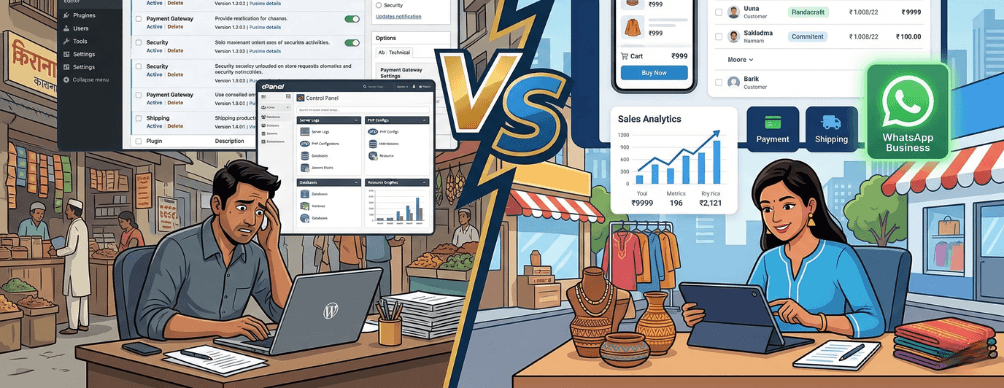
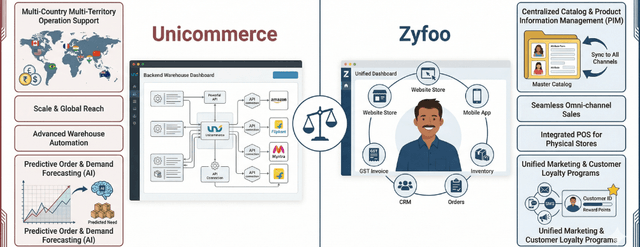
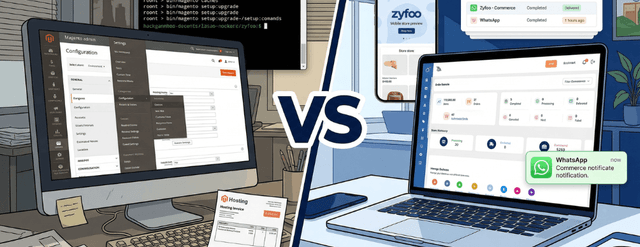
WooCommerce has been a dominant name in eCommerce for over a decade. It powers a significant share of online stores globally, and in India it has attracted a large base of merchants who were drawn to its open-source nature, its extensive plugin ecosystem, and the fact that the core software itself carries no licensing cost. For many Indian sellers who launched their first store between 2015 and 2021, WooCommerce was the default answer. That default is being challenged in 2026. A growing number of Indian merchants, particularly those who started on WooCommerce and have hit operational friction as they scaled, are now evaluating purpose-built SaaS platforms. Zyfoo, built specifically for Indian SMB commerce conditions, is among the platforms being compared most frequently in that evaluation process. This article does not declare a universal winner. The right platform depends on where your business is today, where you intend to take it, and what technical capacity you have in your team. What this comparison does is give you a clear, practical picture of how each platform performs across the dimensions that matter most for Indian merchants, so you can make the decision with full information rather than marketing claims.
Before comparing features, it is important to understand the fundamental architecture of each platform, because the architecture shapes every other decision you will make about hosting, maintenance, integrations, and scaling.
WooCommerce: An Open-Source Plugin on WordPress
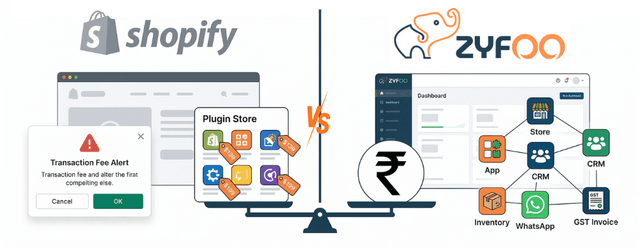
WooCommerce is not a standalone eCommerce platform. It is a plugin that runs on top of WordPress, which is itself a content management system originally designed for blogging. To run a WooCommerce store, you need a hosting account, a WordPress installation, the WooCommerce plugin, and typically a collection of additional plugins to add the functionality that most modern online stores require: payment gateway integration, shipping rate calculation, inventory management, SEO tools, page builders, and so on. This architecture gives WooCommerce enormous flexibility. Because WordPress has tens of thousands of plugins and themes, almost anything is technically possible. But it also means that you, or someone on your team, are responsible for assembling, configuring, and maintaining all of those components. Hosting goes down, plugins conflict with each other, WordPress core updates break theme compatibility, and security patches need to be applied regularly. The open-source model shifts operational responsibility to the store owner.
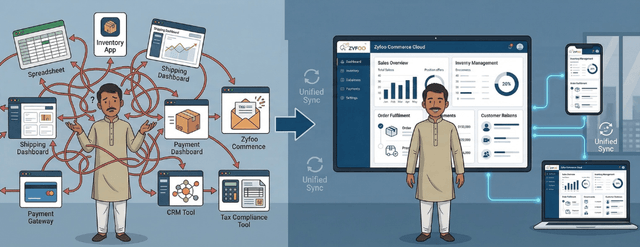
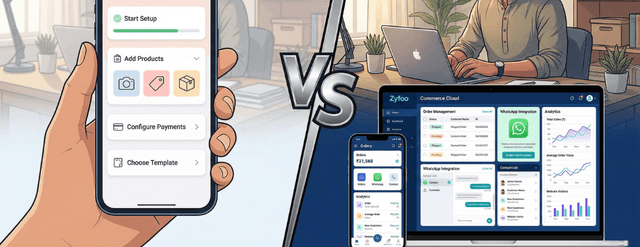
Zyfoo is a cloud-hosted Software-as-a-Service platform built from the ground up for Indian B2B and B2C eCommerce. Unlike WooCommerce, which requires you to bring your own hosting and assemble your technology stack, Zyfoo provides a unified platform that includes the storefront, order management, inventory, CRM, payment gateway integrations, courier connections, WhatsApp commerce, and reporting in a single subscription. You do not manage servers, apply security patches, or troubleshoot plugin conflicts. The infrastructure is managed by Zyfoo. The fundamental difference is who owns the operational burden of keeping the platform running. With WooCommerce, that burden is yours or your developer s. With Zyfoo, it is the platform s responsibility.
Side-by-Side Feature Comparison
| Feature | Zyfoo | WooCommerce |
| Setup and go-live time | 1 to 3 days | 1 to 4 weeks (with developer) |
| Hosting requirement | Included in plan | Separate purchase required |
| WordPress dependency | None | Mandatory |
| Indian payment gateways (UPI, Razorpay, PayU) | Native, no plugin needed | Requires paid plugins |
| COD management | Built in | Plugin required |
| WhatsApp commerce integration | Native | Third-party plugin or custom dev |
| Branded Android mobile app | Included | Separate app development required |
| Multi-channel order management | Unified dashboard | Plugin-dependent, fragmented |
| Real-time inventory sync | Native across channels | Plugin-dependent |
| Indian courier integrations (Delhivery, Shiprocket) | Native | Plugin or manual API setup |
| CRM module | Built in | Separate plugin or external CRM |
| ERP integration | Built in | Custom development or third-party |
| Security and SSL | Managed by platform | Owner s responsibility |
| Platform updates and maintenance | Automatic | Manual by store owner or developer |
| Technical support | Dedicated support included | Community forums, paid developer |
Setup Experience and True Cost of Ownership
One of the most misleading aspects of evaluating WooCommerce is the phrase free and open source. The core WooCommerce plugin is free to download. The total cost of running a WooCommerce store for an Indian SMB, however, is rarely free and is frequently higher than a comparable SaaS platform once all the components are accounted for.
The WooCommerce Cost Stack
A functional WooCommerce store for an Indian merchant typically requires the following investments beyond the core plugin.
- Web hosting: Shared hosting starts at Rs 200 to Rs 500 per month but is generally insufficient for a store with real traffic. A managed WordPress hosting plan suitable for eCommerce runs Rs 800 to Rs 3,000 per month from providers like Hostinger, SiteGround, or WP Engine s lower tiers.
- Premium theme: A well-designed, mobile-optimized WooCommerce theme costs Rs 3,000 to Rs 8,000 as a one-time purchase, with annual renewal fees for support and updates.
- Payment gateway plugins: Razorpay, PayU, and Cashfree offer WooCommerce plugins, some free and some paid. Configuration requires developer involvement, especially for COD flow and webhook setup.
- Shipping and courier plugins: Shiprocket s WooCommerce plugin is free but requires account setup and testing. Delhivery integration typically requires a developer for API-level configuration.
- SEO plugin: Yoast SEO or Rank Math, both free in core but paid for advanced features, are near-mandatory for any WooCommerce store with SEO ambitions.
- Security plugin: Wordfence or Sucuri for malware scanning, firewall, and login protection. Free tiers exist but paid plans at Rs 3,000 to Rs 8,000 annually are recommended for stores handling transactions.
- Developer fees: Initial setup by a WordPress developer in India costs Rs 15,000 to Rs 60,000 depending on scope. Ongoing maintenance, plugin updates, and customization requests add Rs 5,000 to Rs 20,000 per month for merchants who cannot manage it themselves.
| WooCommerce Cost Component | Typical Annual Cost (INR) |
| Managed WordPress hosting | Rs 12,000 to Rs 36,000 |
| Premium theme with annual renewal | Rs 3,000 to Rs 10,000 |
| Paid plugins (SEO, security, backups, etc.) | Rs 8,000 to Rs 20,000 |
| Developer setup and ongoing maintenance | Rs 30,000 to Rs 2,40,000 |
| SSL certificate (if not included in hosting) | Rs 0 to Rs 5,000 |
| Total estimated annual spend | Rs 53,000 to Rs 3,11,000+ |
What Zyfoo s Pricing Model Looks Like
Zyfoo operates on a flat SaaS subscription model where hosting, security, updates, Indian payment integrations, courier connections, the mobile app, and customer support are all included in the plan fee. There are no surprise plugin costs, no developer retainer for routine maintenance, and no hosting bill arriving separately. For a detailed breakdown of current plan pricing, visit Zyfoo s pricing page. The practical implication is that the total cost of ownership comparison between WooCommerce and Zyfoo looks very different from the headline licensing cost comparison. For an Indian SMB processing 50 to 500 orders per month, a fully configured WooCommerce store with developer support routinely costs more annually than a Zyfoo subscription that includes capabilities WooCommerce does not even offer natively.
India-Specific Capabilities: Where the Gap Is Widest
The most significant differences between Zyfoo and WooCommerce for Indian merchants are not in the headline feature list. They are in the India-specific capabilities that WooCommerce requires custom development or paid plugins to replicate, and that Zyfoo provides natively.
UPI and Indian Payment Gateway Support
UPI is the dominant payment method in Indian eCommerce, yet WooCommerce does not include native UPI support. To accept UPI payments, a WooCommerce merchant needs to install a payment gateway plugin (Razorpay, PayU, or Cashfree), configure API keys, set up webhooks for payment confirmation, and test the checkout flow. For a merchant who does not have developer experience, this is a non-trivial process that frequently results in misconfigured payment flows that silently fail at checkout. Zyfoo integrates UPI, Razorpay, PayU, COD, and BNPL options natively. There is no plugin installation, no webhook configuration, and no risk of a payment gateway update breaking the checkout flow without warning.
WhatsApp Commerce
WhatsApp Commerce, the ability for customers to browse a catalog, place an order, and receive order updates entirely within WhatsApp, is not available in WooCommerce without custom development. Third-party WhatsApp business API providers can be integrated into WooCommerce, but this requires selecting a BSP (Business Solution Provider), setting up message templates, connecting the API to WooCommerce order hooks, and building the catalog sync. The setup cost and ongoing maintenance make this inaccessible to most SMB merchants without a dedicated technical resource. Zyfoo s WhatsApp commerce integration is built into the platform s feature set and activates without custom development. Catalog sync, order placement, and automated order updates over WhatsApp are configurable from the Zyfoo dashboard without writing a line of code.
Indian Courier and Logistics Integrations
Connecting a WooCommerce store to Indian courier partners such as Delhivery, XpressBees, Ecom Express, and Shiprocket requires either using third-party shipping plugins or building direct API integrations. Shiprocket s WooCommerce plugin is the most commonly used shortcut, but it adds another subscription fee and an additional dashboard to manage. Pin-code-based rate calculation, automatic AWB generation, and tracking status push to customers each require separate configuration steps. For Zyfoo, courier integrations with major Indian logistics partners are part of the core platform. Pin-code serviceability checks, rate comparison across courier partners, AWB generation, and tracking notifications are handled within the Zyfoo order management workflow without any third-party plugin.
Vernacular Language Storefront
Selling to customers in tier-2 and tier-3 Indian markets frequently requires a storefront that can display in regional languages. WooCommerce supports multilingual storefronts through plugins like WPML or Polylang, both of which require paid upgrades for eCommerce compatibility and add complexity to content management workflows. Zyfoo s platform is built with multilingual support in its architecture, reflecting the reality that Indian SMBs often serve customers who are more comfortable transacting in Tamil, Telugu, Hindi, Kannada, or Bengali than in English.
Technical Ownership: Who Is Responsible for What
This is the dimension of the WooCommerce vs Zyfoo comparison that most merchants underestimate before they have lived through a production incident. When a WooCommerce store goes down during peak sales hours because a hosting server runs out of memory, or when a plugin update causes the checkout page to throw a fatal error on a Friday evening, the merchant is responsible for resolution. That means either having a developer on call, or waiting until Monday for a developer to become available.
What WooCommerce Store Owners Are Responsible For
- Selecting and managing web hosting including server resource scaling during traffic peaks
- Applying WordPress core, theme, and plugin updates, and managing conflicts that arise from those updates
- Monitoring and renewing SSL certificates to prevent browser security warnings
- Running regular database backups and testing restore procedures
- Managing WordPress security including login protection, malware scanning, and firewall rules
- Resolving checkout failures that result from payment gateway webhook misconfigurations or plugin conflicts
- Ensuring PCI DSS compliance standards for storing and processing payment data
What Zyfoo Handles on the Merchant s Behalf
- Cloud infrastructure management, uptime monitoring, and auto-scaling during traffic spikes
- Platform security, SSL management, and data encryption
- Regular platform updates deployed without requiring merchant action or causing downtime
- Payment gateway integrations kept current as gateway APIs change
- Courier integration maintenance as courier partner APIs are updated
- Data backup and disaster recovery managed at the platform level
The practical implication is that a WooCommerce store requires either a recurring developer relationship or a technically capable in-house resource. For Indian SMB founders whose core competency is their product and their customer relationship, not web infrastructure management, this is an ongoing operational distraction that Zyfoo removes entirely.
SEO Capabilities: WooCommerce s Traditional Strength Under Scrutiny
WooCommerce s most frequently cited advantage over SaaS platforms is its SEO capability. Because WooCommerce runs on WordPress, it benefits from WordPress s mature content management infrastructure, Yoast SEO or Rank Math integration, and the ability to create rich editorial content alongside the product catalog. For merchants whose growth strategy is heavily content-driven, this is a genuine advantage. However, it is worth examining the practical SEO outcomes for Indian SMB merchants rather than the theoretical capability.
Where WooCommerce SEO Delivers Real Value
- Merchants with a dedicated content team who publish regular blog articles, buying guides, and comparison content alongside their product catalog
- Stores with complex product taxonomies that require granular URL structure control and custom schema markup
- Businesses with existing WordPress investments and an established site architecture that would be costly to migrate
Where WooCommerce SEO Falls Short for Indian SMBs
- Page speed: WordPress with a full plugin stack routinely scores poorly on Core Web Vitals for mobile users in India, where the Largest Contentful Paint and First Input Delay metrics are directly affected by plugin bloat
- Technical SEO maintenance: Canonical tags, hreflang attributes for multilingual stores, and structured data markup all require plugin configuration and ongoing auditing that most SMBs do not perform consistently
- Mobile performance: Even with a mobile-responsive theme, WooCommerce stores often fail the mobile experience benchmarks that Google uses in its page experience ranking signals
Zyfoo s platform generates clean, SEO-friendly product URLs, includes structured data markup for products automatically, and is architected for mobile performance from the ground up. For the vast majority of Indian SMB merchants, the practical SEO outcomes from Zyfoo are competitive with WooCommerce, and the mobile performance advantage is meaningful.
Scalability: Handling Growth Without Rebuilding
The scalability question in the WooCommerce vs Zyfoo comparison has two distinct dimensions: technical scalability (can the platform handle higher order volume and traffic?) and operational scalability (can the merchant team manage the growing operation without proportional headcount increases?).
Technical Scalability
WooCommerce can technically scale to handle high order volumes, but doing so requires deliberate infrastructure investment. A WooCommerce store processing 1,000 or more orders per day needs a managed WordPress hosting plan with dedicated resources, a CDN, database optimization, object caching, and potentially a reverse proxy. These are solvable problems, but they require active management and progressive investment as order volume grows. Zyfoo s cloud infrastructure auto-scales with demand. During a flash sale or a viral social media moment that drives a sudden traffic spike, the platform resources expand automatically without requiring the merchant to upgrade a hosting plan or contact a developer.
Operational Scalability
This is where the gap is most consequential for Indian SMBs. As order volume grows on WooCommerce, operational complexity grows proportionally because each new channel, courier partner, or warehouse location typically requires new plugin configuration or developer work. On Zyfoo, adding a new sales channel, connecting an additional courier partner, or expanding to a new product category is handled within the existing platform without new technical setup.
| Scaling Milestone | WooCommerce Requirement | Zyfoo Requirement |
| First 100 orders per day | Shared hosting, basic setup | Standard plan, no additional setup |
| 500 orders per day | Managed hosting upgrade, caching plugins, developer review | No infrastructure change required |
| Adding WhatsApp channel | Custom API integration or BSP contract + plugin | Enable in dashboard settings |
| Adding second courier partner | New plugin install and API configuration | Select from existing integrations |
| Launching mobile app | Separate app development project (Rs 1 to 5 lakhs) | Included in platform, no development cost |
| Multi-warehouse inventory | Custom development or advanced paid plugin | Configurable within platform |
Support is an area where the philosophical difference between open-source and SaaS creates a very practical divergence in merchant experience.
WooCommerce Support Model
WooCommerce as an open-source project is supported by community forums, extensive documentation, and a large global developer ecosystem. When something breaks, you can search the WordPress forums, post a question on Stack Overflow, or hire a freelance developer from platforms like Upwork or local WordPress developer communities in India. The quality and speed of resolution depend entirely on the complexity of the problem and your ability to find the right resource quickly. Plugin-specific support is handled by each plugin s developer separately. If a conflict between two plugins breaks your checkout, resolving it may require coordinating between two different support channels simultaneously, which is a frustrating experience during a time-sensitive sales period.
Zyfoo Support Model
Zyfoo provides dedicated platform support as part of the subscription. Because Zyfoo controls the full stack, the support team can diagnose and resolve most issues without requiring the merchant to coordinate between multiple vendors. For Indian SMBs who are not technical, having a single point of contact for any platform issue is a meaningful operational advantage. Zyfoo s support documentation and onboarding resources are built specifically for the Indian merchant context, not translated from a global template.
The answer depends on where your business sits today and where it is headed. Here is a practical decision framework that does not require a technical background to use.
WooCommerce Is a Better Fit If
- You have an existing WordPress website with substantial content and established SEO rankings that would be costly to migrate
- You have a technical co-founder or a dedicated in-house developer who manages the platform actively
- Your business model is heavily content-driven with blog traffic as the primary customer acquisition channel
- You need highly customized checkout flows or product configurators that require bespoke development
- You are in a niche category with specialized WooCommerce plugins that address your specific requirements
Zyfoo Is a Better Fit If
- You are launching a new store and want to be live and taking orders within days, not weeks
- You do not have a dedicated developer and cannot maintain the technical overhead of a WordPress stack
- You sell across multiple channels including website, WhatsApp, and mobile app, and need unified order management
- You want Indian courier integrations, UPI payments, and COD management to work out of the box
- You are scaling past 100 orders per day and need the platform to grow with you without infrastructure projects
- You want a branded Android app without an app development budget
- You serve buyers in tier-2 and tier-3 Indian markets who use WhatsApp as their primary digital touchpoint
Migrating from WooCommerce to Zyfoo: What the Process Looks Like
For merchants who have decided to make the move, the migration question is practical and reasonable. A WooCommerce store contains product data, customer records, order history, and potentially years of content. The migration process needs to address each of these systematically.
What Migrates Easily
- Product catalog including titles, descriptions, images, prices, variants, and SKUs
- Customer account data and order history for records purposes
- Product categories and collections structure
- Basic content pages such as About, Contact, and Policy pages
What Requires Planning
- SEO URL structure: Zyfoo generates clean product URLs, but existing WooCommerce URLs need 301 redirects set up to preserve search rankings during the transition
- Custom page designs built on a specific WooCommerce theme will need to be recreated using Zyfoo s storefront templates
- Any custom checkout flows built through WooCommerce hooks will need to be replaced with Zyfoo s native checkout configuration
- Blog content: If your WooCommerce site has a substantial WordPress blog driving SEO traffic, a migration plan for that content is important before switching platforms
Zyfoo s onboarding team assists with data migration for merchants moving from WooCommerce. The typical migration timeline for an SMB store with up to 1,000 SKUs is 3 to 7 business days. Speak to the Zyfoo team to get a migration assessment specific to your store s current state.
Choosing between WooCommerce and Zyfoo is not a technical decision in the way that most technology comparisons frame it. It is a business decision about where you want to invest operational energy and what kind of technical risk you want to carry as you grow. WooCommerce asks you to become a part-time infrastructure manager in exchange for maximum flexibility. Zyfoo asks you to accept a managed environment in exchange for removing operational complexity and getting India-specific commerce capabilities that WooCommerce cannot match natively. For Indian merchants who are building towards 1,000 orders per month and beyond, who want WhatsApp and mobile app commerce without a development budget, and who want their team focused on customers and products rather than plugin maintenance, the practical choice points clearly toward Zyfoo. See the full platform capabilities at zyfoo.tech and make the comparison against your current setup with a complete picture in hand.