Acquiring a customer is the beginning of the relationship, not the destination. Every Indian D2C brand and online seller knows this at some level, but most still spend the overwhelming majority of their marketing budget on top-of-funnel acquisition, Instagram ads, Google Shopping, influencer promotions, and marketplace spend, while investing almost nothing in bringing the customers they have already won back to the store a second, third, and fourth time. The result is a leaky bucket. New customers flow in through expensive paid channels, buy once, and then drift away toward a competitor s offer, a marketplace listing, or simply the inertia of not thinking about the brand again. The average Indian D2C brand loses more than 60 percent of its first-time buyers before a second purchase happens. At those retention rates, the economics of growth through acquisition alone become increasingly difficult to sustain. Push notifications are one of the most direct, cost-effective, and consistently underused tools available to reverse that pattern. They are not a new technology. They have been a standard feature of mobile apps and web browsers for years. What has changed is the sophistication with which the best ecommerce brands are deploying them, the depth of personalisation that is now possible, and the specific strategies that consistently drive repeat purchases rather than simply generating opens. This guide covers everything an Indian D2C brand or online seller needs to know about push notifications in 2026: what the data says about their effectiveness, which notification types deliver the highest return, how to build a strategy that drives repeat purchases without burning out subscribers, and how the mobile and notification infrastructure inside Zyfoo Commerce Cloud enables all of this without requiring a separate tool or a dedicated technical setup.
Why Push Notifications Are the Retention Channel Most Indian Brands Ignore
Indian ecommerce is overwhelmingly mobile-first. India has over 700 million smartphone users and the ecommerce market is valued at approximately 147 billion dollars in 2026, with mobile commerce driving the vast majority of that figure according to industry data. Flipkart and Amazon India have both reported that over 85 percent of their total platform traffic originates from mobile apps. For D2C brands with their own apps or mobile-optimised stores, the customer is almost always on a phone when they browse, when they buy, and when they receive any form of communication from the brand. That mobile-first reality is precisely what makes push notifications so powerful and so underused at the same time. A push notification reaches a customer directly on their phone, bypasses the inbox where email open rates for ecommerce brands in India average between 12 and 18 percent, and appears in the notification tray where the customer is already spending three or more hours of their day. It does not require the customer to open an app, check a website, or scroll through a social media feed to see the message. It is, in the most literal sense, a direct line of communication to the customer s attention. Research from Airship studying 63 million app users across 1,500 apps found that retention rates were nearly three times higher for users who received one or more push notifications in their first 90 days of using an app compared to those who received none. For retail apps specifically, weekly push notifications led to two to five times higher 90-day retention, and daily notifications produced three to six times higher retention. These are not marginal improvements. They represent a fundamental difference in whether a customer stays engaged with a brand or quietly disappears. Despite this evidence, most Indian D2C brands either do not send push notifications at all, or send bulk promotional blasts that lack segmentation, timing intelligence, and personalisation. The result is high unsubscribe rates and a channel that underperforms its potential by a significant margin. The brands that are using push notifications effectively in 2026 are treating them as a precision tool rather than a broadcast channel, and the difference in outcomes is substantial.
The Five Types of Push Notifications That Drive Repeat Purchases
Not all push notifications serve the same purpose or produce the same results. There is a meaningful difference between a notification that informs, one that re-engages, one that recovers, one that rewards, and one that simply interrupts. Understanding which type to use at which stage of the customer journey is the foundation of an effective push notification strategy.
- Abandoned Cart Notifications
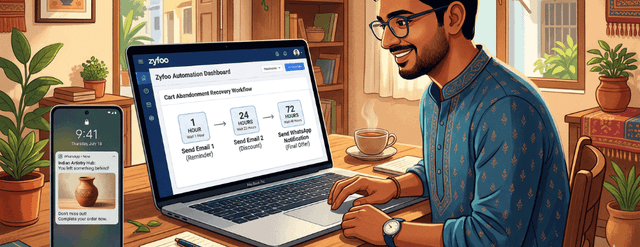
Abandoned cart notifications are the highest-ROI push notification type available to any ecommerce brand. A customer who adds products to a cart and leaves without completing the purchase has expressed clear purchase intent. They selected specific products, went through the initial steps of checkout, and then stopped. The reasons for abandonment vary from distraction to second-guessing a price to an unexpected delivery cost appearing at checkout, but the intent was there. A well-timed push notification sent 30 to 60 minutes after cart abandonment, followed by a second one after 24 hours if the first did not convert, captures a significant portion of these lost transactions. The message does not need to offer a discount. For many customers, a simple reminder that their cart is waiting is sufficient because the abandonment was driven by distraction rather than a deliberate decision not to buy. When a discount is offered, it should be reserved for the second or third notification to avoid training customers to abandon carts intentionally in expectation of an offer.
- Back-in-Stock and Price Drop Alerts
A customer who viewed a product that was out of stock or wished a price were lower is a high-intent prospect who has already done the evaluation work and decided they want the product. The only barrier is availability or price. A back-in-stock push notification sent at the moment the product becomes available again captures that intent at its freshest point. A price-drop notification for a product a customer viewed multiple times but did not purchase converts at significantly higher rates than a cold promotional message because the customer already knows and wants the product. These notifications are personalised by definition because they are tied to a specific customer s browsing or wishlist behaviour. That personalisation is a large part of why they perform well. The customer experiences them as relevant information rather than a promotional intrusion, and the timing is determined by a business event rather than a marketer s campaign calendar.
- Post-Purchase Re-Engagement Notifications
The window immediately after a purchase is the highest-engagement moment in the customer relationship. The customer is satisfied, the product is on its way or in their hands, and the brand is top of mind. Most brands waste this window by sending only transactional notifications, the order confirmed, the order shipped, the order delivered sequence, and then going quiet for weeks or months. A structured post-purchase sequence uses this window to deepen engagement before it closes. A product care or usage tip sent two to three days after delivery adds value without asking for anything. A replenishment reminder sent at the expected reorder interval for consumable products such as skincare, supplements, or food items catches the customer at the moment they are naturally thinking about restocking. A review request sent 7 to 10 days after delivery, when the customer has had time to form an opinion, generates higher quality reviews than an immediate post-purchase prompt.
- Personalised Offer Notifications
Sending a discount notification to your entire subscriber base is the push notification equivalent of a mass email blast. It produces some conversions but at the cost of a high unsubscribe rate from the customers who find the offer irrelevant, and a devaluation of the brand in the eyes of customers who see discounting as a signal of low quality. Personalised offer notifications, segmented by purchase history, product category preference, and purchase frequency, perform significantly better on every metric. A customer who consistently buys from the home decor category receives an offer relevant to that category. A high-value customer who has made five or more purchases receives early access to a sale rather than the standard promotion. A customer who has not purchased in 60 days receives a re-engagement offer at a higher discount than the standard promotion because their churn risk justifies the investment. This kind of segmentation is not complicated to implement on a platform that stores customer purchase history, but the results in terms of conversion rate and unsubscribe rate are dramatically different from bulk campaigns.
- Festival and Season-Specific Notifications
India s ecommerce calendar is defined by festival seasons: Diwali, Onam, Navratri, Eid, Pongal, Christmas, and the January and August republic and independence day sale periods. These are the windows where purchase intent is naturally elevated across nearly every product category, and customers are actively looking for relevant offers and new products. A push notification strategy that maps to the Indian festival calendar and sends relevant, timely communications in the two to three weeks before and during each peak period captures elevated intent at the moment it exists. The key is relevance, a fashion brand sending Diwali outfit inspiration to its full subscriber base is relevant and welcome, but sending the same message to a customer who has only ever bought home decor products demonstrates that the brand does not know them and reduces trust in every future notification.
| Notification Type | Best Timing | Average Conversion Rate |
|---|
| Abandoned cart (first send) | 30 to 60 minutes after abandonment | Highest, 10 to 20% of recoveries |
| Back-in-stock alert | Immediately when product restocked | High, customer intent already proven |
| Post-purchase replenishment | Based on product reorder cycle | Consistent, predictable revenue |
| Personalised segmented offer | Based on customer behaviour data | 2 to 4x higher than bulk offer |
| Festival season notification | 2 to 3 weeks before peak date | Strong when category-relevant |
Web Push vs App Push: Understanding the Difference and Using Both
Indian ecommerce brands often treat push notifications as a single channel, but there are two meaningfully different types: web push notifications delivered through the browser, and app push notifications delivered through a native mobile app. Each has distinct advantages, opt-in behaviour, and reach characteristics, and a complete push notification strategy uses both.
Web Push Notifications
Web push notifications are delivered through the customer s browser, both on desktop and mobile, without requiring a native app installation. They appear in the operating system s notification panel on mobile or as a pop-up in the corner of the screen on desktop. Any customer who visits the brand s website and accepts the notification prompt becomes reachable via web push, regardless of whether they have an account or have ever made a purchase. This makes web push valuable at the top of the funnel. A first-time visitor who browses and leaves without buying can be reached via web push if they accepted the opt-in, which means the brand has a second opportunity to bring them back. For Indian brands where a significant portion of traffic comes from first-time visitors who do not convert immediately, this re-engagement capability is meaningful. Web push also works across desktop and laptop users, which is a meaningful segment for higher-value purchase categories like electronics, furniture, and premium apparel where customers often prefer to browse on a larger screen before buying.
App Push Notifications
App push notifications require a native mobile app and reach only customers who have installed it. The trade-off for this higher friction at the entry point is significantly higher engagement once the customer is opted in. App users are, by definition, more committed to the brand than casual web visitors. They have chosen to install the app, allocate storage space to it, and keep it on their phone. That level of commitment translates to higher open rates, higher click-through rates, and higher conversion rates for push notifications compared to web push. For Indian D2C brands, having a branded mobile app is increasingly important not just for the push notification channel but for the overall customer experience. India s mobile commerce growth rate is one of the fastest in the world, and customers who have a brand s app on their phone are significantly more likely to make repeat purchases than those who access the store only through a mobile browser. A mobile-optimised store with a dedicated customer app, as offered within Zyfoo Commerce Cloud s platform, is the infrastructure that makes app push notifications possible without requiring a separate app development project.
| Feature | Web Push | App Push |
|---|
| Setup requirement | Browser opt-in only | App installation required |
| Reach potential | All website visitors who opt in | Only app users |
| Average opt-in rate | 5 to 15% of website visitors | 68% of app users (ecommerce) |
| Engagement quality | Moderate, broader audience | High, committed users |
| Best use case | First-time visitor re-engagement | Repeat purchase and loyalty |
| Works on desktop | Yes | Limited to mobile |
Building a Push Notification Strategy That Drives Retention, Not Unsubscribes
The most common failure mode in push notification marketing is not a lack of sends. It is sends without strategy. A brand that pushes a daily promotional notification to its entire subscriber list without segmentation or personalisation will see a declining open rate and a rising unsubscribe rate within weeks. Once a customer unsubscribes from push notifications, they are effectively lost from this channel permanently, because re-prompting for notification permission is not possible on most platforms without the customer actively re-enabling it through their device settings. Building a push notification strategy that increases retention rather than eroding it requires four specific disciplines.
Frequency Discipline
Research from Business of Apps on push notification engagement across industries found that ecommerce brands maintain unsubscribe rates below one percent when sending up to five push notifications per day. That figure sounds high, but it assumes a mix of transactional, behavioural, and promotional notifications rather than five daily promotional blasts. In practice, for most Indian D2C brands, two to three push notifications per week represents a healthy cadence that keeps the brand top of mind without creating notification fatigue. The more important principle is that frequency should be proportional to relevance. A customer who just abandoned a cart should receive a reminder within the hour, even if they received a promotional notification yesterday. A customer who has been dormant for 45 days should receive a carefully crafted re-engagement notification once, not a flood of messages attempting to win them back quickly. Matching the send frequency to the customer s relationship stage prevents the fatigue that drives unsubscribes.
Segmentation Depth
Effective push notification segmentation for Indian ecommerce goes beyond basic categories like first-time buyers and returning customers. The most impactful segments to create and maintain are based on purchase behaviour: product category preferences, average order value, purchase frequency, time since last purchase, and seasonal purchase patterns. A customer who buys consistently in the 500 to 800 rupee range should not receive the same messaging as a customer whose average order is 2,500 rupees or more. A customer who bought twice in November during Diwali season but was quiet for the rest of the year is a seasonal buyer who deserves different targeting than a monthly repeat purchaser. The data for this segmentation already exists in the brand s order management and CRM system. The question is whether the push notification platform can read and act on that data, or whether it operates as a separate, disconnected tool that can only segment on basic demographic or session data. Integrated platforms that connect order history with notification triggers produce segmentation that reflects how customers actually behave, rather than approximations based on limited data.
Message Quality and Personalisation
A push notification has approximately three seconds to earn a click before a customer dismisses it or ignores it. That constraint demands clarity above all other qualities. The message should communicate one specific thing, what the customer should pay attention to and why it is relevant to them specifically, in under 50 characters of title text and under 100 characters of body text. The title should reference something the customer already knows or cares about: a specific product name, a category they have bought from, an event they are likely anticipating, or a personalised offer tied to their history. A generic title like New Arrivals This Week produces far lower engagement than New prints in women s kurtas, your favourite category. The second message tells the customer exactly why this notification is relevant to them, which is the core of what personalisation means in the push channel.
Timing Intelligence
The same notification sent at 9 AM versus 11 PM will produce dramatically different open rates, and the optimal timing varies by customer segment, product category, and day of the week. For Indian ecommerce customers, research consistently shows that push notifications perform best in the late morning window between 10 AM and 12 PM, and in the evening window between 7 PM and 9 PM, which corresponds to commute, lunch, and post-dinner mobile browsing patterns. Festival-adjacent timing adds another layer of consideration. A Diwali promotion notification sent on Dhanteras performs differently from the same notification sent on Diwali day itself, because purchase behaviour shifts toward gifting, celebratory shopping, and impulse decisions in the days leading up to the festival. Mapping notification timing to the Indian festival calendar and the specific purchase behaviour patterns associated with each festival is a strategy that consistently produces above-average results for brands that get the mechanics right.
The Opt-In Strategy: Building a Subscriber Base That Actually Converts
A push notification strategy is only as good as the quality of the subscriber base it reaches. An opt-in base built through aggressive, friction-heavy prompts on every page visit will be large but will convert poorly because it includes many customers who accepted the prompt by mistake or without understanding what they were signing up for. An opt-in base built through value-led prompts at the right moments will be smaller but will convert at significantly higher rates. The highest opt-in rates in Indian ecommerce come from three specific contexts. First, the moment immediately after a first purchase, when the customer is satisfied and receptive to staying connected with the brand. Second, when the opt-in is tied to a specific benefit such as being the first to know when a sale starts or receiving early access to new collections. Third, on product pages for out-of-stock items, where the customer has demonstrated specific product intent and welcomes the back-in-stock alert as a genuine service. For web push specifically, the standard browser prompt that says This site wants to send you notifications has an average acceptance rate of 5 to 15 percent across ecommerce sites. Brands that add a custom pre-prompt, a branded message explaining what they will send and why the customer should accept, before the browser native prompt appears see opt-in rates of 25 to 40 percent because the customer understands the value proposition before making the decision. For app push, the opt-in rate is dramatically higher, with ecommerce apps averaging 68 percent across the industry, because customers who have installed a brand s app have already demonstrated a higher level of engagement and are more open to receiving notifications from that brand specifically. This is one of the most compelling arguments for building a branded mobile app for any D2C brand in India that is serious about building a direct customer relationship outside of marketplace dependency.
How Push Notification Automation Works in Practice for D2C Brands
The most effective push notification strategies for Indian D2C brands rely heavily on automation, notifications that are triggered by a customer action or a time-based rule rather than manually sent by a marketing team. Automated notifications account for a small fraction of total sends but generate a disproportionately large share of conversions because they are delivered at precisely the right moment in the customer s journey. The automation flows that produce the most consistent repeat purchase results are structured around the key moments in the customer lifecycle where intent, receptivity, and relevance are all highest simultaneously. These are not the moments a marketer would naturally schedule a campaign around. They are the moments the customer s own behaviour reveals.
The New Customer Onboarding Sequence
A customer who makes their first purchase should enter an onboarding notification sequence that begins within 24 hours of their order being placed. The sequence is not promotional in nature. It is relational. The first notification, sent after the order is confirmed and before it ships, should communicate something about the brand, its story, its values, or a useful piece of content related to what the customer bought. The second, sent when the order ships, should be the standard tracking notification but with a personalised message that reinforces the brand relationship rather than just providing logistics data. The third, sent three to five days after delivery, should add value related to the product, a usage tip, a care guide, or complementary product information. This three-stage onboarding sequence costs the brand almost nothing to run once it is configured, but it transforms the post-purchase experience from a transactional interaction into a brand relationship. Customers who receive this kind of thoughtful onboarding communication make a second purchase at measurably higher rates than those who receive only standard order status notifications.
The Replenishment Reminder Sequence
For brands that sell consumable products, replenishment reminders are one of the highest-converting automated notifications available. A skincare brand that sells a moisturiser with a typical 30-day usage cycle can configure a notification to be sent 25 days after purchase, reminding the customer that their product is likely running low and making it easy to reorder with a single tap. A supplement brand, a coffee brand, a food and snack D2C, or any brand where the product has a predictable consumption rate can use this automation to convert repeat purchases that would otherwise require the customer to remember on their own, which most customers fail to do consistently. The replenishment reminder works precisely because it is genuinely useful to the customer. It saves them from running out of something they rely on. That utility is the reason conversion rates for replenishment notifications are consistently among the highest of any automated push notification type, often exceeding 15 to 25 percent in well-configured implementations.
The Win-Back Sequence
A customer who has not purchased in 45 to 60 days, depending on the brand s typical purchase frequency, has entered the early stage of churn. They have not unsubscribed and they have not explicitly rejected the brand, but their engagement is fading. A win-back notification sequence deployed at this point, before the customer is fully lost, is dramatically more effective than trying to re-acquire them through paid advertising months later. The win-back sequence typically consists of two to three notifications over a 7 to 10 day period. The first is a re-engagement message that references something specific about the customer s history with the brand, their most purchased category or a favourite product. The second, if the first does not convert, is a time-limited offer that creates urgency without being aggressive. The third, sent only to those who still have not re-engaged, is the clearest possible value proposition the brand can make. After the win-back sequence, customers who remain unresponsive should be removed from the active push list to preserve deliverability and segment quality.
Most push notification platforms report on open rate, click-through rate, and delivered count. These are useful as diagnostic metrics but they are not the metrics that should drive strategy decisions. The metric that matters most for an ecommerce brand s push notification programme is revenue per notification send, which captures the full commercial impact of the channel per unit of customer exposure.
| Metric | What It Tells You | Healthy Benchmark |
|---|
| Open rate | Whether the message earned attention | 3 to 8% for web push, 8 to 15% for app push |
| Click-through rate | Whether the message earned action | 1 to 3% for web push, 3 to 7% for app push |
| Conversion rate | Whether the click resulted in purchase | 1 to 5% depending on notification type |
| Revenue per send | Commercial impact per notification | Track trend, aim for month-on-month growth |
| Opt-out rate | Whether the messaging is causing fatigue | Under 0.5% per campaign is healthy |
| Repeat purchase rate (cohort) | Whether the channel is building retention | Compare push vs non-push subscriber cohorts |
The last metric in the table, repeat purchase rate comparison between push subscribers and non-subscribers, is the most important one for understanding the channel s strategic value. If customers who receive push notifications are making a second purchase at a rate 30 or 40 percent higher than those who do not receive them, that tells a clear story about the channel s contribution to retention that open rates and click-through rates alone cannot reveal. For brands running this comparison for the first time, the typical finding is that push notification subscribers have significantly higher lifetime value than non-subscribers, not because push notifications are magical, but because customers who opt in to push notifications are already more engaged and more likely to be retained. The channel amplifies that existing engagement rather than creating it from scratch. Understanding this distinction helps brands focus their opt-in strategy on customers who show genuine engagement signals rather than attempting to push-notify every visitor regardless of engagement level.
Common Push Notification Mistakes Indian Brands Make and How to Avoid Them
The gap between push notification theory and practice is wide for most Indian D2C brands. Understanding the common mistakes that reduce effectiveness is as important as knowing the best practices.
Sending the Same Message to the Entire List
This is the most common and most damaging push notification mistake. A brand with 50,000 push subscribers sending the same promotional notification to all 50,000 will see a high send volume but low conversion rates, high unsubscribe rates among the customers who find the message irrelevant, and a gradual degradation of the overall subscriber quality over months. The solution is segmentation, even basic segmentation by product category purchase history or by number of orders placed, which immediately improves relevance and reduces unsubscribe rates.
Ignoring the Time of Send
A push notification sent at 2 AM because a campaign was scheduled without accounting for the customer s local time will be seen as an intrusion rather than a service, and it will drive unsubscribes from exactly the customers who were most active and most likely to convert at a better time. Always schedule push notifications within the customer s local timezone and within the high-engagement windows that research and the brand s own historical data identify as optimal.
Using Push Only for Promotional Messages
When customers associate a brand s push notifications exclusively with promotional offers and discounts, they begin to evaluate each notification as a marketing message rather than as a communication from a brand they trust. The brands that build the highest-retention push channels send a mix of transactional, informational, and promotional notifications so that customers learn to associate the channel with value in multiple forms, not just with offers.
Not Testing Message Copy and Timing
A push notification title that increases open rates by even two percentage points compounds significantly at scale. Brands that run systematic A/B tests on notification titles, message body copy, emoji use, and send timing over 30 to 60 days consistently find improvements that would not have been discovered through intuition alone. The test does not need to be complex: two variants, a clear winning metric, a minimum sample size that makes the result statistically meaningful, and a commitment to applying the learning to future sends.
How Zyfoo s Mobile and Notification Infrastructure Supports This Strategy
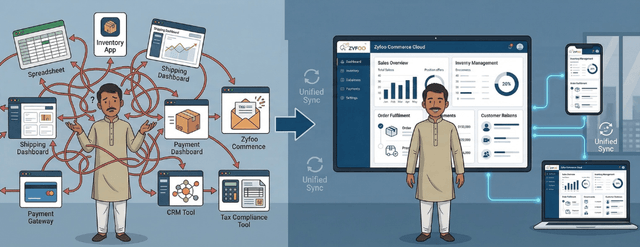
For most Indian D2C brands using separate tools for their online store, their customer database, and their push notification platform, the biggest operational challenge in executing the strategies described above is data connectivity. The push notification platform needs to know what each customer has bought, when they bought it, how much they spent, and which products they browsed but did not purchase. When this data lives in a separate order management system or CRM that the notification tool cannot read automatically, the sophisticated segmentation and automation that drives the highest results becomes difficult and time-consuming to maintain.This is the operational advantage of building on an integrated platform like Zyfoo Commerce Cloud. Because the store, the order management system, the CRM, and the mobile app all live within the same platform, the customer s purchase history, browsing behaviour, and order status are all available to the notification system automatically. There is no manual export of customer data, no waiting for a nightly sync between tools, and no risk of sending a back-in-stock notification for a product the customer already purchased because the two systems updated at different times. The Petkadai case is a real example of this: using Zyfoo s mobile notification feature, the aquarium store achieved a 30 percent increase in traffic and month-on-month growth in sales after integrating mobile push into its customer engagement strategy, without requiring a separate push notification tool or a developer to build the connection. For D2C brands evaluating their platform options, this integration question is worth examining carefully before committing. A platform like Zyfoo vs Shopify comparison is a useful reference for understanding specifically how an all-in-one platform that includes mobile and notifications natively compares to a platform where push notifications require a separate paid app and a manual integration to connect customer data.
Building Repeat Revenue Through the Push Channel in 2026
The Indian ecommerce market in 2026 is simultaneously more competitive and more mobile than it has ever been. Customer acquisition costs are rising across paid channels as more brands compete for the same inventory of ad placements on Instagram, Google, and marketplace search results. The brands that build sustainable growth are the ones that make every acquired customer more valuable over time, driving second, third, and fourth purchases rather than treating each sale as a standalone transaction. Push notifications, deployed with the discipline of segmentation, timing intelligence, and automation, are one of the most powerful tools available for building that repeat purchase behaviour. They are fast, direct, personalised at scale, and when executed well, welcomed by customers rather than experienced as intrusion. The channel consistently outperforms email in click-through and conversion rates for ecommerce, requires no paid distribution cost beyond the platform subscription, and reaches customers in the moment and on the device where they are already most likely to buy. The brands that will define Indian D2C growth over the next three years are not necessarily the ones with the largest acquisition budgets. They are the ones that build the deepest, most consistent customer relationships through every touchpoint available to them, and push notifications are among the most direct and most effective of those touchpoints for a mobile-first market like India. The strategy is not complicated in concept. It requires consistent execution, a platform that makes segmentation and automation accessible without a technical team, and a genuine commitment to sending notifications that earn the customer s attention rather than exhausting it. Brands that build this capability in 2026 will have a retention advantage that compounds month over month into a material difference in lifetime customer value and sustainable revenue growth.