If you have been looking for a no-code way to launch an online store in India, chances are you have come across both Zyfoo and OkShop in your research. Both platforms were positioned at roughly the same audience: first-time sellers, small business owners, and entrepreneurs who want to get online quickly without hiring a developer or spending months configuring a system. But there is a critical difference between the two that any serious seller needs to know upfront before making a decision. This comparison breaks down what each platform offered, where they stand today, and what your real options are if you are evaluating no-code store builders right now.
OkShop: What It Was and Why It No Longer Exists
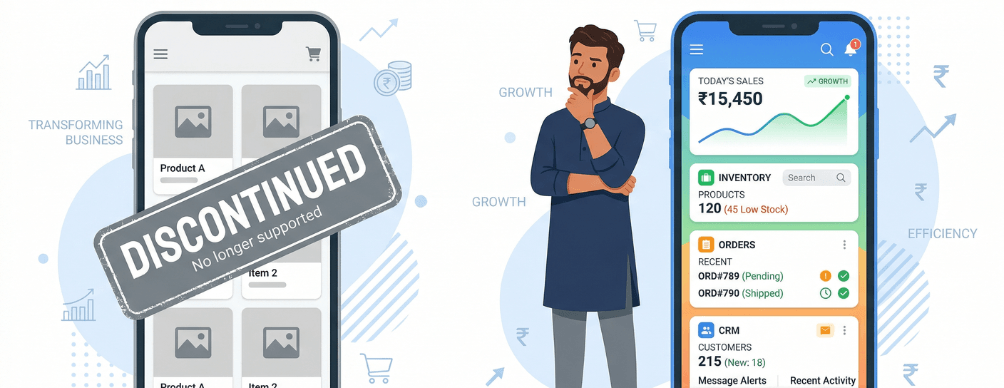
OkShop was a product launched by OkCredit, the Bengaluru-based digital bookkeeping startup backed by Tiger Global. The idea was straightforward: give small merchants and kirana store owners a one-tap way to create a digital storefront, list their products, and share their catalog via WhatsApp. At its peak, OkShop had crossed a hundred thousand installs and served as a lightweight entry point into online selling for merchants who had never run a digital store before. It worked on Android, was free to use, and required almost no setup time. However, in April 2022, OkCredit officially shut down OkShop. The platform was removed from the Play Store for new users and existing merchants were given a short migration window before the service was discontinued entirely. The shutdown followed OkCredit s strategic pivot toward fintech and lending, as the company found it difficult to build a sustainable business model around free storefront tools. As of today, OkShop is no longer available as an active product. It is not accepting new registrations, has no ongoing development, and cannot be used to build or run a live online store.
Zyfoo: Built to Run Your Entire Business
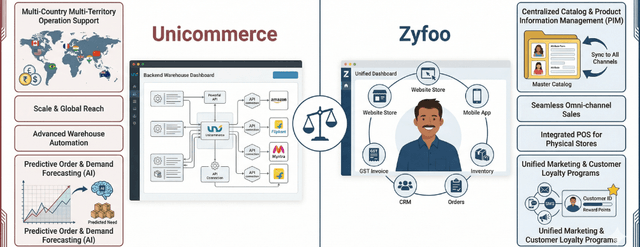
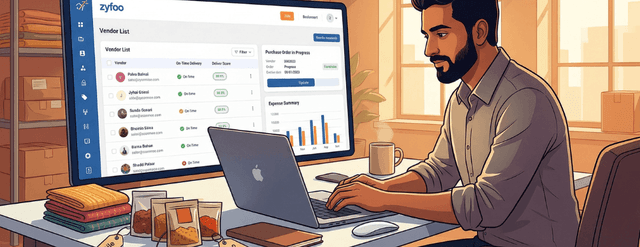
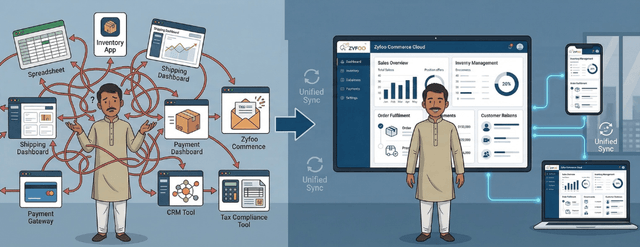
Zyfoo is a cloud-based, all-in-one ecommerce and ERP platform built for Indian businesses at every stage of growth, from a first-time entrepreneur setting up their first store to a scaling D2C brand managing thousands of orders each month. Unlike OkShop, which was a narrow app focused on catalog sharing, Zyfoo is a complete commerce platform that handles your store, inventory, orders, CRM, billing, logistics integrations, and customer communication from a single dashboard. Zyfoo supports no-code store building through its built-in tools, integrates with platforms like Zoho, WhatsApp, Magento, and WooCommerce, and includes a mobile admin app so business owners can manage operations on the go. It is actively developed, regularly updated, and serves live merchants across multiple product categories in India today.
Zyfoo vs OkShop: Feature-by-Feature Comparison
Since OkShop is no longer operational, the table below reflects what each platform offered at its best alongside the current state of each option.
| Feature | OkShop | Zyfoo |
| Platform Status | Discontinued (April 2022) | Fully active and growing |
| Store Setup | One-tap Android app | No-code web and mobile setup |
| Product Catalog | Basic catalog, WhatsApp sharing | Full catalog with variants and bundles |
| Order Management | Basic tracking only | End-to-end order management |
| Inventory Management | Not available | Built-in real-time inventory tracking |
| Payment Integration | Limited | Multiple Indian gateways including UPI and COD |
| CRM | Not available | Built-in CRM and customer accounts |
| Logistics Support | Not available | Multi-courier logistics integration |
| SEO Tools | Not available | Built-in SEO with optimized product pages |
| Scalability | Not designed to scale | Scales from SMB to enterprise operations |
| Ongoing Support | Discontinued | Active onboarding and dedicated support |
Why OkShop Shutting Down Matters for Your Decision
If you are researching this comparison as a new seller, the most important thing to understand is that OkShop no longer exists as a working product. Any store built on OkShop is either already migrated elsewhere or no longer running. There is no new sign-up, no customer support, and no ongoing infrastructure keeping it alive. The shutdown happened not because the idea of a no-code store builder was wrong, but because the free model OkShop operated on could not generate enough revenue to sustain the product. When OkCredit pivoted toward fintech lending, OkShop became a distraction from the company s core priorities and was dropped. This raises a broader point that any first-time entrepreneur should take seriously when choosing a platform to build their store on. Platform longevity and commercial stability matter just as much as features. A platform that looks free and frictionless today but shuts down in two years forces you to migrate your entire catalog, rebuild your SEO rankings, re-educate your customers on where to shop, and absorb all of that operational disruption at exactly the moment your business needs stability.
What First-Time Sellers Actually Need From Day One
The appeal of OkShop was real: zero setup time, mobile-first experience, and the ability to share a product link on WhatsApp within minutes. For a merchant with no prior digital selling experience, that accessibility had genuine value. But as any seller who has grown past their first hundred orders will tell you, what a store needs changes quickly. Tracking stock levels, managing returns, following up on abandoned carts, running promotions, and understanding which products are actually driving margin all require tools that a basic catalog app was never designed to provide. A platform that cannot grow alongside your business creates a forced migration at the worst possible time. Here is what first-time sellers actually need from a store builder, even before they realize it:
- A store that works on both desktop and mobile for your customers
- Payment options that support UPI, COD, and card without additional plugins
- Inventory tracking so you stop overselling products you no longer have in stock
- Basic order management so you know what to pack, ship, and follow up on
- SEO-ready product pages so your store can be found through search
- A platform that will still exist and improve three years from today
Zyfoo addresses all of these from the start. The Zyfoo platform overview shows how the system is structured to support sellers from their first product listing through to full-scale ecommerce operations.
Where Zyfoo Is Built Specifically for the Indian Market
Indian Payment Gateway Depth
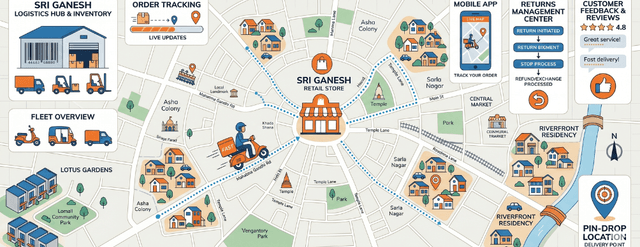
Selling in India means your checkout needs to support UPI, Razorpay, PayU, COD, and installment options depending on your category and customer base. OkShop s payment integration was limited and was never built to handle the full spectrum of Indian payment preferences. Zyfoo integrates with multiple Indian payment gateways natively, so your customers can pay the way they prefer without any extra configuration on your end.
WhatsApp Commerce Without Losing Your Store Infrastructure
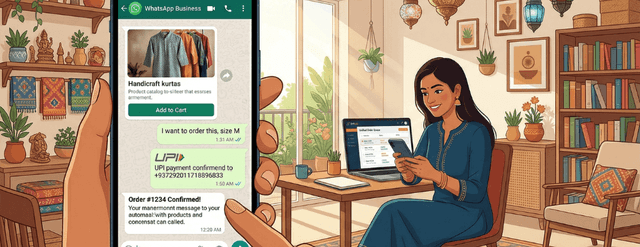
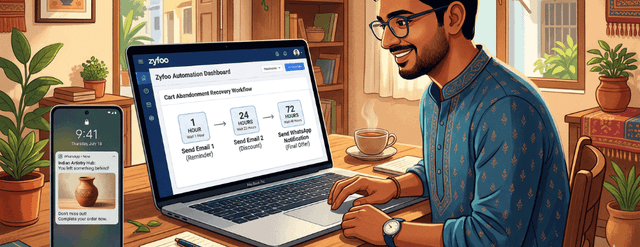
OkShop s core use case was WhatsApp catalog sharing, which was useful but shallow. Zyfoo supports WhatsApp as one channel within a full order management and communication system. You can send order confirmations, delivery updates, and re-engagement messages over WhatsApp while your store, inventory, and customer data stay organized in one place. It gives you the conversational selling experience Indian buyers prefer without sacrificing the backend structure that operations require.
Designed to Scale, Not Just to Start
The difference between a tool that gets you started and a platform that carries your growth is the most important distinction in this space. Zyfoo Commerce Cloud is designed for the full arc of a seller s journey. Brands that begin with a handful of SKUs and a few orders a week can stay on the same platform when they are managing thousands of products, multiple warehouse locations, and an active returning customer base. There is no ceiling you hit that forces you to rebuild from scratch.
If You Are Looking for an OkShop Alternative Right Now
If you are one of the merchants who built a store on OkShop in its early days and is now looking for a stable replacement, or if you came across OkShop in a recommendation list that was not recently updated, here is what the migration path to Zyfoo looks like. Zyfoo supports structured product data import, so you are not manually re-entering every SKU. The onboarding team helps you configure payment gateways, shipping integrations, and your store front before you go live. And because Zyfoo s store pages are SEO-optimized by default, you start recovering any lost organic search visibility from the moment your store is published. If you want to compare multiple platforms before deciding, G2 s ecommerce platform listings offer peer reviews across a wide range of tools. For sellers with India-specific requirements around payments, logistics, and WhatsApp commerce, a platform built for the Indian market will generally serve you better than a global tool retrofitted for local use.
Choosing the Right No-Code Store Builder in 2026
To be straightforward about it: OkShop is not an option available to new sellers today. If you are evaluating this comparison to make a platform decision, the relevant question is not whether OkShop was better or worse than Zyfoo at any point in time. The question is what the best available option is for a seller starting or growing their online store in India in 2026. The table below frames that decision based on common seller situations.
| Your Situation | Recommended Approach |
| First store, no prior selling experience | Start on Zyfoo for a complete, no-code setup from day one |
| OkShop user looking for a replacement | Migrate to Zyfoo with structured product and order import |
| Want WhatsApp as your primary sales channel | Zyfoo integrates WhatsApp within a full commerce platform |
| Need COD and UPI support at checkout | Zyfoo has native Indian payment gateway integrations built in |
| Planning to scale beyond 500 orders a month | Zyfoo Commerce Cloud is designed to scale with your growth |
The Broader Lesson for Indian Online Sellers
The story of OkShop is not isolated. The Indian ecommerce tools space has seen several lightweight, free products come and go over the past few years as the companies behind them struggled to find sustainable revenue models. Every time one of them shuts down, the merchants who built their stores on those platforms absorb the disruption in data loss, customer confusion, and operational downtime. Choosing a store platform is a long-term infrastructure decision. The right platform grows with you, remains financially stable, and keeps investing in the capabilities your business needs as it matures. A platform that charges a fair, transparent price today is almost always a better long-term bet than one that is free but operationally fragile. Zyfoo was built with that continuity at its core. From the no-code store setup that gets you live quickly, to the ERP-grade inventory and order management that scales with your volume, to the active development team improving the platform every quarter. To see what a setup looks like for your specific business type, start at zyfoo.tech.